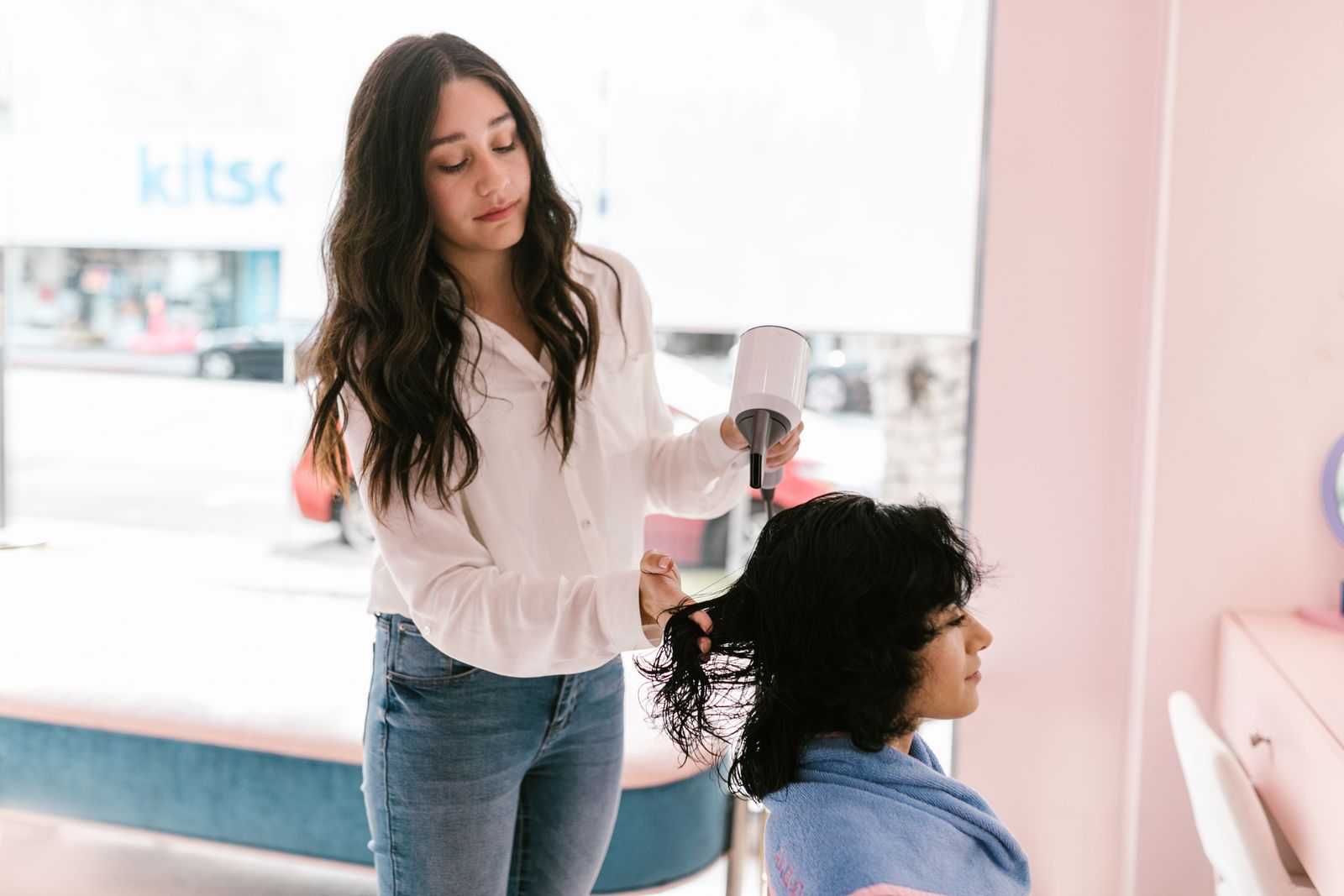
Opening a salon in the United States is not one filing. It is a sequence of dependent decisions that must be rebuilt for the selected state, city, county, address, services, premises, ownership, and worker model: define the concept; test demand and capacity; screen the premises; identify professional, facility, business, tax, employment, building, fire, accessibility, safety, and other applicable authorities; document money, systems, people, and operating controls; then open only after every required gate has written evidence.
Georgia is the first complete state implementation path in this guide. It demonstrates how the national decision framework becomes a state-and-local evidence register; it is not a checklist for another state and does not imply that one Georgia pathway covers every service or locality.
The order matters. In Georgia, an entity registration does not approve a service. A salon/shop license is not the same as a city or county business license or occupational tax certificate. A submitted application is not permission to work. A cosmetology, barber, nail, or esthetics credential does not authorize every beauty, body-art, laser, medical, or device-based service. A signed lease does not prove that the premises can receive the intended use, equipment, plumbing, ventilation, accessibility work, or occupancy approval. [GA-BIZ-01, GA-SOS-ENTITY-01, GA-SOS-SALON-01, GA-SOS-FAQ-01, GA-CB-STATUTE-2024-01]
The safest opening plan therefore uses release gates, not a hopeful date. Each gate has an owner, source, evidence location, current status, expiration or refresh trigger, and a stop rule. If a critical authority, premises, funding, or service-scope decision is unresolved, the opening date remains conditional. [SBA-01, SBA-07, SBA-10, SBA-11, GA-BIZ-01]
- Opening a salon in the United States is not one filing.
- Georgia is the first complete state implementation path in this guide.
- The order matters.
Scope and limits
This guide is a U.S. planning framework for a hair salon, barbershop, nail salon, esthetics studio, home salon/shop, suite-based concept, or mixed nonmedical beauty business. Georgia is its first worked state path. Every other state and locality requires its own primary sources and named reviewers. The guide helps an owner organize decisions and evidence; it does not provide legal, tax, accounting, payroll, classification, insurance, accessibility, architecture, engineering, occupational-hygiene, infection-control, medical, or investment advice.
This draft does not decide:
- which legal entity is best;
- whether a particular activity is barbering, cosmetology, nail care, esthetics, body art, massage, cosmetic laser service, or medical practice;
- whether an individual, suite, home, mobile arrangement, or mixed-service facility is licensed or compliant;
- whether a lease permits the intended use;
- which local permits or inspections apply to an address;
- whether a worker is an employee, contractor, renter, partner, or owner for any law;
- whether a product, implement, device, procedure, sanitation process, ventilation design, or waste path is safe or compliant;
- whether a service or retail transaction is taxable;
- how much a salon should spend, borrow, charge, earn, or hold in reserve; or
- when an authority, landlord, contractor, insurer, lender, vendor, or reviewer will complete its work.
Georgia is the selected starting jurisdiction, but the business must still identify its exact city or county and address. County and municipal requirements cannot be inferred from a statewide page. Body art, permanent makeup, cosmetic laser, massage, injections, medical aesthetics, and other regulated or medical services require separate authority maps beyond the ordinary salon/shop pathway. [GA-CB-SOS-HOWTO-SHOP-01, GA-CB-SOS-FAQ-01, GA-CB-STATUTE-2024-01, GA-DPH-BA-RULES-001, GA-GCMB-LASER-RULES-001, GA-MASSAGE-SCOPE-001]
1. Create the opening control record
Create one control record before making a large commitment. It should be the source of truth for the project, not a marketing document.
| Field | Required entry | Evidence rule |
|---|---|---|
| Project version | Stable name and date | Change when service, site, ownership, capital, or opening scope changes materially |
| Exact jurisdiction | Georgia, county, city, address | No “Georgia requirements complete” status without local authority names |
| Business format | Storefront, suite, home, shared, mobile, or mixed | Label proposed until premises and licensing reviewers confirm it |
| Entity and ownership | Proposed or approved structure, owners, decision rights | Do not select from a generic article; attach professional advice and state filing evidence |
| Service matrix | Every service family and planned launch phase | Each service must have a scope/credential/authority result |
| Worker model | Owner, employee, renter, contractor, partner, apprentice | Written label and actual controls must receive fact-specific review |
| Premises status | Searching, letter of intent, lease draft, executed, buildout, approved | Record contingencies, evidence, dependencies, and stop rights |
| Funding status | Owner cash, approved funds, conditional funds, gap | A projection is not available cash |
| Critical path | Longest unresolved chain to opening | Update from actual authority/vendor responses |
| Conditional opening date | Date range plus assumptions | Never present as guaranteed |
| Stop rules | Conditions requiring pause, redesign, or exit | Give each stop rule an owner and review date |
Recommended status language
Use statuses that communicate evidence rather than optimism:
not_startedresearchingawaiting_authority_readbackawaiting_quotesubmitted_not_approvedapproved_with_conditionsapproved_and_currentblockednot_applicable_with_reasonexpired_refresh_required
“Applied,” “paid,” “scheduled,” and “contractor says okay” are not substitutes for approved_and_current when an approval is required.
2. Define the business and service boundary
Write the opening service menu before evaluating a location. Do not begin with a broad label such as “full-service beauty studio.” The service list determines credentials, premises, products, equipment, waste, insurance, timing, records, and reviewers.
Service authority worksheet
| Planned service | Exact steps and intended result | Proposed practitioner credential | Proposed facility authorization | Other authority question | Status and evidence |
|---|---|---|---|---|---|
| Haircut or styling | Owner entry | Owner entry | Owner entry | Product, sanitation, local use | Pending until verified |
| Chemical hair service | Owner entry | Owner entry | Owner entry | SDS, ventilation/exposure, plumbing, waste | Pending until verified |
| Barber service | Owner entry | Owner entry | Owner entry | Scope, implement sanitation, mixed-license facility | Pending until verified |
| Nail service | Owner entry | Owner entry | Owner entry | Product/SDS, pedicure equipment, ventilation, waste | Pending until verified |
| Nonmedical esthetics | Owner entry | Owner entry | Owner entry | Exact esthetics scope, product/device, sanitation | Pending until verified |
| Brow/lash service | Owner entry | Owner entry | Owner entry | Exact technique, product, eye-area and scope | Pending until verified |
| PMU/microblading | Owner entry | Not assumed | Not assumed | Georgia DPH body-art classification and exact county Health Authority review | Separate ledger and written classification required [GA-DPH-BA-RULES-001, GA-DPH-BA-PAGE-001] |
| Laser/energy-based service | Owner entry | Not assumed | Not assumed | Classify the exact device, intended use and current Georgia rule before selecting a path | Separate medical/laser review required [GA-GCMB-LASER-RULES-001, GA-GCMB-2026-UPDATE-001] |
| Massage | Owner entry | Not assumed | Not assumed | Massage licensing, scope, facility and advertising boundaries | Separate review required [GA-MASSAGE-SCOPE-001] |
| Injection or medical procedure | Owner entry | Not assumed | Not assumed | Medical authority, prescriber, delegation, records and emergency questions | Separate clinical/legal review required [GA-GCMB-DISCIPLINE-001] |
Georgia sources distinguish professional categories and narrow exceptions. An exception for a limited activity must be read with every condition; it cannot be expanded to adjacent services, tools, chemicals, products, or claims. Esthetics language does not authorize medical aesthetics, dermatologic diagnosis/treatment, or laser services. [GA-CB-STATUTE-2024-01, GA-CB-CODE-PORTAL-01]
For ordinary cosmetology and barber professions, the current Georgia Board material identifies master cosmetologist, master barber, barber II, hair designer, esthetician, and nail technician categories. The exact individual license and salon/shop requirements still need confirmation against the current law, Department 240 rules, application, and actual service menu. [GA-CB-RULES-2026-01, GA-CB-RULE-240-6-03]
Launch now, later, or never
Assign each service to one of three groups:
- Launch scope: authorization, premises, training, insurance, equipment, workflow, cost, and review can be completed before opening.
- Later phase: demand may exist, but the service adds an unresolved authority, buildout, capital, staffing, or clinical dependency.
- Out of scope: the owner intentionally excludes the service.
The list protects the project from “one more service” decisions after the lease and layout are fixed. A later service may need a different room, sink, ventilation path, waste process, practitioner, policy, or regulator. Treat it as a change request with budget and schedule impact.
3. Test demand without inventing it
Define the real decision: Can the selected Georgia catchment support the proposed service mix at the usable capacity and cost of the selected model? Do not start with a statewide beauty-industry total. A local salon needs evidence about the clients it can actually serve, the problem they want solved, the travel or access pattern, competing alternatives, service timing, and available provider capacity. [SBA-03, CENSUS-01, CENSUS-02]
Research register
| Question | Evidence method | Date/geography | What it can show | What it cannot show |
|---|---|---|---|---|
| Who is the intended client? | Interviews, current client records, observed local demand, public data | Owner entry | A documented pattern within the stated method | Total demand or guaranteed bookings |
| Which service problem matters? | Interviews and service-specific testing | Owner entry | Problems and language reported by participants | Market-wide willingness to pay |
| Which alternatives exist? | Dated field and online review | Owner entry | Visible offers and access at that time | Competitor profitability or quality |
| What prices are displayed? | Dated menu capture with inclusions | Owner entry | Public listed price and scope | Collected revenue, discounting, cost, or margin |
| When is capacity constrained? | First-party schedules, observed availability, operator timing | Owner entry | The selected records' pattern | Industry-wide utilization |
| What would prevent conversion? | Interviews, access review, lost-lead reasons | Owner entry | Documented objections or barriers | A universal conversion rate |
Preserve dataset vintage, geography, sample, method, exclusions, and limitations. Census and SBA resources can support research structure and public-data discovery; they do not validate a salon's demand, market share, average ticket, service duration, or booking conversion. [SBA-03, CENSUS-01, CENSUS-02]
Demand stop rules
Examples of evidence-based stop or redesign triggers:
- the concept depends on a service that has no confirmed authorization path;
- the catchment research does not support the proposed service focus;
- the intended client cannot reach or use the shortlisted location as assumed;
- realistic staffed capacity is far below the revenue model's required capacity;
- the business requires unsupported prices or utilization to cover obligations;
- the funding plan has no slower-demand cash case; or
- a landlord or lender requires a personal or financial exposure the owner has not reviewed.
These are decision prompts, not universal pass/fail thresholds.
4. Choose the operating model
Compare business models using the same service scope and decision fields.
| Model | Capacity unit | Important dependencies | Cost and control questions |
|---|---|---|---|
| Owner-operated suite | Owner appointment minutes and suite access | Suite agreement, permitted services, shared facilities, storage, sink/equipment access, insurance | Fixed suite charge, owner labor, limited backup capacity, shared-system fees, exit terms |
| Small storefront | Staffed provider/station/room hours | Lease, buildout, local approvals, salon/shop license, staffing, utilities | Rent/additional charges, buildout, payroll/renters, systems, maintenance, opening cash |
| Home salon/shop | Owner capacity and permitted home facility | Board requirements, zoning, neighborhood/lease/association rules, access, parking, separation, local business authorization | Conversion cost, privacy, accessibility, household separation, insurance, resale/exit |
| Shared or mixed facility | Exact allocated station/room/provider time | Contracts, licenses, shared sanitation, storage, access, records, client flow, responsibility | Shared fees, conflicts, scheduling, data control, liability, termination |
| Proposed mobile unit | Blocked until the exact Georgia mobile-unit facility path is confirmed | Current Georgia ledger records a permanent-location anchoring condition plus full facility/local review; no travel-service model is assumed | Do not budget route density or mobile revenue until written authority, premises, sanitation, storage, insurance and local results exist |
Do not infer that a home, suite, flea-market, or shared arrangement is ready merely because the Georgia Board FAQ discusses such arrangements. The exact facility must meet current state rules and local requirements. [GA-CB-SOS-FAQ-01, GA-CB-RULE-240-4-01]
The Georgia facility ledger states that a mobile unit is not licensed unless it satisfies the Board's facility conditions and is anchored in a permanent location. The row above is an investigation placeholder, not permission to travel among service locations or operate a vehicle-based salon. [GA-CB-RULE-240-4-01]
Worker model is a separate decision
For every person who may work in the business, record:
- services and credentials;
- who controls schedule, price, client assignment, service standard, supplies, payment collection, discounts, records, marketing, rework, and complaints;
- who bears ordinary business expense and loss;
- workstation or rental terms;
- pay method, tips/service charges, payroll treatment, insurance, and benefits;
- system, key, data, and client access;
- absence, substitution, termination, and post-relationship handling; and
- which legal/payroll/tax professional reviewed the facts.
Do not choose a label to reach a preferred cost. This draft has no approved source that classifies a worker from a contract label. Record the actual relationship and obtain fact-specific legal, payroll and tax review. Georgia employer registrations and coverage analyses depend on the actual business and people; the DOL and workers' compensation sources identify administrative paths and general boundaries, not worker status. [GA-DOL-01, GA-DOL-02, GA-SBWC-01]
5. Screen the premises before commitment
A promising address is not a viable salon until the service, authority, building, accessibility, utilities, cost, and contract paths work together.
Premises evidence packet
Request and organize:
- exact address, parcel/unit, landlord/owner, current use, and proposed use;
- zoning/permitted-use readback from the controlling local authority;
- certificate-of-occupancy or change-of-use path;
- building, plumbing, electrical, mechanical/ventilation, fire/life-safety, sign, and health/environmental review contacts as applicable;
- measured plan with entrances, routes, service areas, restrooms, sinks, storage, utility panels, HVAC/exhaust, equipment, laundry/waste, and exits;
- accessibility assessment for the altered/existing premises and business operations;
- utility availability and capacity;
- landlord work, tenant work, approvals, contractor requirements, insurance, liens, restoration, and delays;
- proposed lease use clause and prohibited activities;
- rent, additional charges, deposits, guarantees, commencement, free-rent/buildout periods, increases, maintenance, damage, relocation, assignment, renewal, default, and exit terms;
- state salon/shop application address and facility evidence; and
- dated quotes plus uncertainty and contingency for every unresolved premises item.
SBA location guidance supports investigating location-dependent costs, taxes, zoning, regulations, and incentives. It does not approve a site or lease. Federal ADA resources support accessibility planning but do not certify a design from this draft. [SBA-07, ADA-01, USA-01, USA-02]
Lease gate
Before a nonrevocable commitment, require written review of at least:
- permitted use covers the exact launch service list;
- state and local approval contingencies are addressed;
- plans and landlord approvals are defined;
- buildout scope, payment, ownership, maintenance, and restoration are defined;
- utilities and equipment loads can be investigated;
- access, construction, signage, deliveries, waste, and operating hours are workable;
- delays and failed approvals have an allocated consequence;
- personal guarantee and default exposure are understood; and
- opening cash includes obligations that start before revenue.
This is a review list, not lease language.
7. Build the opening budget and cash gate
The opening budget must show timing and evidence, not just a total. Separate:
- acquisition/deposits and professional investigation;
- design, permits, buildout and premises work;
- equipment, furniture, fixtures, installation and commissioning;
- technology, booking/payment, network, security and initial configuration;
- initial inventory, backbar, retail and disposables;
- entity, licensing, local approvals, professional services and insurance;
- hiring, payroll setup, recruiting, training and pre-opening labor;
- pre-opening rent, utilities, storage, financing and subscriptions;
- launch preparation and measured marketing tests;
- contingency for defined risks; and
- working cash for obligations after opening while demand develops.
The Georgia and federal sources identify categories and agencies. They do not establish a universal Georgia salon startup cost. Every figure must be a dated quote, contract amount, official current fee, operator record, or visibly hypothetical scenario. [SBA-04, SBA-09, GA-BIZ-01, GA-SOS-SALON-01, GA-DOR-01, GA-DOL-01, GA-SBWC-01]
Opening-cost register
| Cost | One-time / recurring / refundable | Amount and tax treatment | Source/date/expiry | Payment date | Dependency | Base/contingency/working cash |
|---|---|---|---|---|---|---|
| Owner entry | Owner entry | Owner entry | Quote or official source | Owner entry | Approval or milestone | Owner entry |
Do not place refundable deposits, permanent improvements, consumable inventory, prepaid subscriptions, recurring rent, debt payments, and working capital in one undifferentiated bucket. At minimum, their payment timing, recoverability, availability for operations and decision risk differ. Their accounting and tax treatment is unresolved in this draft and requires qualified review. [SBA-04, SBA-09]
Cash-gap gate formula
remaining_cash_gap_at_decision_date
= max(0,
    unpaid_committed_one_time_cash
    + unpaid_estimated_base_cost_cash
    + approved_contingency_cash
    + working_cash_reserve_including_any_minimum_operating_balance
    - unrestricted_project_cash_available_at_decision_date
    - approved_funding_available_before_each_due_date)

funding_surplus_at_decision_date
= max(0,
    unrestricted_project_cash_available_at_decision_date
    + approved_funding_available_before_each_due_date
    - unpaid_committed_one_time_cash
    - unpaid_estimated_base_cost_cash
    - approved_contingency_cash
    - working_cash_reserve_including_any_minimum_operating_balance)
This is an EDITORIAL_METHOD, not an official formula. Costs already paid are excluded from the unpaid-cost numerator and are also absent from current unrestricted cash, so they are not subtracted a second time. The working-cash reserve must include any selected minimum operating balance once and only once. Do not count conditional financing, hoped-for revenue, unapproved credit, refundable deposits unavailable for operations, or owner capacity to “figure it out later” as available funding.
A cash gap never displays as a negative number. When available project cash and approved funding exceed the modeled requirement, the separate surplus field shows the excess without relabeling it as negative need.
Scenario guardrails
- Never divide by zero or negative usable capacity.
- Do not model 100% booking as the only case.
- Separate booked revenue, completed service value, collected revenue, sales tax collected, tips, refunds, discounts, chargebacks, and owner contributions.
- Keep debt principal, interest, depreciation, owner draws, owner labor, payroll, and tax concepts distinct; obtain professional review.
- Model obligations by week or month so the timing of pre-opening cash burn is visible.
- Refresh any quote when scope, date, address, service, vendor, or construction assumption changes.
8. Design capacity, workflow, and sanitation
The layout, schedule, service definitions, staffing model, and sanitation process must describe the same operation. Do not install the maximum number of chairs or tables and call that capacity. Usable capacity is constrained by qualified provider time, station or room availability, service duration, consultation, processing, setup, cleanup, equipment, plumbing, product handling, client movement, accessibility, breaks, records, and ordinary disruption.
Capacity record by service
| Field | Operator entry | Evidence |
|---|---|---|
| Exact service/version | Required | Current service definition |
| Authorized provider categories | Required | Current Georgia/local scope review |
| Active provider minutes | Measured | Timed workflow, not fastest example |
| Processing or unattended minutes | Measured | Workflow test with provider-overlap rules |
| Consultation/setup/cleanup minutes | Measured | Timed workflow |
| Required station/room/equipment | Required | Layout and equipment record |
| Product/disposable package | Required | Exact label/SDS/invoice/use test as applicable |
| Sanitation/reset sequence | Required | Current rule/manufacturer/reviewer evidence |
| Record/checkout time | Measured | Workflow test |
| Rework or interruption allowance | Explicit method | First-party history or labeled scenario |
Calculate theoretical availability separately from realistic saleable time:
staffed_service_minutes
= scheduled_provider_minutes
- breaks_training_admin_and_nonservice_minutes

station_or_room_minutes
= available_facility_minutes
- setup_cleaning_maintenance_and_unavailable_minutes

usable_service_capacity
= minimum_of(
  staffed_service_minutes,
  station_or_room_minutes,
  equipment_or_process_constraint
)
This is an EDITORIAL_METHOD. It does not supply a utilization target. Negative component values are rejected. If the minimum available constraint is zero, modeled service capacity is zero. Any downstream rate or ratio that would divide by usable capacity must return not calculated when usable capacity is zero; this minimum calculation itself contains no denominator.
Sanitation and health evidence
Current Georgia Board material includes facility, posting, inspection, general health/safety, cleansing/disinfection, pedicure-equipment, storage, and contamination-control requirements. A salon needs the live rules, exact products/equipment, manufacturer directions, workflow, and named reviewer—not a generic internet checklist. [GA-CB-RULE-240-4-01, GA-CB-RULE-240-4-02, GA-CB-RULE-240-4-03, GA-CB-RULE-240-4-04, GA-CB-RULE-240-4-05]
For each service area, document:
- handwashing access and actual workflow;
- clean, used, single-use, disinfected, and waste-item separation;
- exact cleaning and disinfection products, labels, contact/use directions, compatibility, concentration or preparation controls where applicable, storage, and replacement;
- implement and equipment paths from use through cleaning, disinfection, drying, storage, and next use;
- pedicure basin/equipment type and its exact current procedure where offered;
- clean and soiled linen storage and laundry path;
- product dispensing and contamination controls;
- food, drink, pets/animals, personal items, and client/professional protective practices under applicable current rules;
- incident, exposure, injury, product reaction, spill, recall, and equipment-failure escalation;
- SDS and worker-hazard communication where applicable;
- waste and sharps/biomedical-waste analysis when the exact service triggers it; and
- inspection evidence and corrective-action ownership.
Do not copy a disinfection time, chemical concentration, ventilation rate, storage interval, waste category, or medical screening rule into public content unless the exact current source and context support it.
Opening workflow test
Run the complete client path before opening:
- discovery and service selection;
- accessibility or communication request;
- booking, disclosures, deposit/policy if used, and confirmation;
- arrival, identity/service confirmation, waiting or queue handling;
- consultation and escalation boundary;
- service preparation, execution, product/equipment controls, and records;
- cleanup, reset, checkout, payment, receipt, tip/service-charge handling, and rebooking;
- aftercare or product information when appropriate and reviewed;
- correction, complaint, incident, refund, dispute, privacy, and accessibility handling; and
- closing inventory, waste, cash/system, security, and facility checks.
Test with ordinary staff and realistic overlap. A successful demonstration by the founder alone does not prove the process is teachable or durable.
9. Set up people, payroll, insurance, and records
Create a role scorecard before recruiting. It should define service scope, credentials, responsibilities, decision authority, capacity assumptions, standards, records access, training, supervision, availability, and review—not demographic proxies or an inflated personality description.
Pre-work evidence for every provider
- verified identity and work authorization process as applicable;
- active credential verified through the official current system;
- exact services mapped to the credential and facility;
- actual worker/owner/renter relationship reviewed;
- written compensation or rental terms reviewed;
- payroll, tax, insurance, and reporting setup appropriate to the relationship;
- training and competency evidence for the exact service/equipment/product;
- confidentiality, records, system, key, payment, and client-access boundaries;
- emergency, incident, complaint, correction, and absence procedures; and
- renewal, CE, expiry, and change-notification calendar.
Georgia provides employer tax registration, Department of Labor services, new-hire routes, and workers' compensation guidance, but these sources do not classify a person or approve a compensation model. The State Board of Workers' Compensation describes a general three-or-more regular-worker coverage threshold and count considerations; a professional must apply current law to the actual entity and people. [GA-DOL-01, GA-DOL-02, GA-SBWC-01]
The Georgia Board's 2026 CE guidance requires affected cosmetology/barber licensees to use CE Broker as described in the current material. Do not convert that into a universal rule for every credential or service. Record each person's category, cycle, hours, exemptions, provider approval, evidence, and renewal status separately. [GA-SOS-CE-01, GA-CB-RULE-240-3-01, GA-CB-CE-2026-01]
Insurance register
Obtain reviewed quotes for the actual operation. Record named insureds, locations, services, people, equipment, products, retail, vehicles, cyber/data exposure, limits, deductibles, exclusions, endorsements, claims-made/occurrence structure, retroactive dates where relevant, additional-insured requirements, certificates, cancellation terms, and renewal dates. A certificate does not prove that an excluded service is covered.
Potential categories for professional review include general liability, professional liability, property/equipment, business interruption, workers' compensation, employment practices, cyber/privacy, commercial auto, crime/cash, and service-specific coverage. This list does not mean every policy applies or is sufficient.
Records map
| Record | System/location | Access | Retention authority | Disposal | Incident owner |
|---|---|---|---|---|---|
| Client contact/booking | Owner entry | Least privilege | Exact business/legal review | Documented | Named role |
| Service notes/consent where applicable | Owner entry | Service-appropriate restriction | Service/jurisdiction review | Documented | Named role |
| Payment/refund/dispute | Processor/accounting systems | Role-limited | Tax/payment review | Documented | Named role |
| License/training/CE | HR/compliance record | Owner/manager | Board/employment review | Documented | Named role |
| Product/SDS/lot/recall | Operations record | Service staff | Manufacturer/regulatory review | Documented | Named role |
| Incident/complaint/correction | Restricted case record | Need-to-know | Legal/insurance review | Documented | Named role |
Collect only what has a defined purpose. Do not place identity documents, tax data, health information, passwords, or confidential contracts in a public CMS or article attachment.
10. Select systems and operational controls
Choose software after the workflow and evidence requirements are known. The system should support the exact booking modes, resources, providers, deposits/policies, communications consent, service records, permissions, exports, payments, reconciliation, reporting, retention, and transition plan. A demo is not proof of production behavior.
At minimum, test:
- creating, editing, canceling, rescheduling, and refunding appointments;
- provider, station/room, equipment, service-duration, buffer, and overlap constraints;
- walk-in/queue flow if used;
- reminders and consent/opt-out behavior;
- deposits, card handling, fees, disputes, partial refunds, packages/memberships, gift cards, taxes and tips as applicable;
- least-privilege roles and account recovery;
- export of clients, appointments, services, transactions, balances, notes and other required objects;
- reconciliation to processor/bank/accounting records;
- data correction, deletion/retention, incident response, vendor support and termination; and
- an offline or outage procedure.
Bookendo and Salon Guide share common ownership. If Bookendo is considered, document that relationship next to every evaluative mention and apply the same requirement, demo, cost, export, security, migration, and review burden as every other platform. This G01 draft does not recommend or rank software.
Pre-opening operational controls
- chart of accounts and bookkeeping workflow reviewed;
- bank/processor reconciliation owner and frequency;
- tax, payroll, unemployment, workers' compensation, license, CE, insurance, lease, local authorization, and vendor calendars;
- price/service/menu source of truth;
- cash, refund, discount, comp, tip/service charge, gift card, package and membership controls;
- inventory receiving, count, storage, use, variance, reorder and recall procedures;
- user access, 2FA, credential removal, backup/export and incident controls;
- opening/closing, lone-worker, key/alarm and emergency procedures;
- correction, complaint, accessibility, privacy and safety escalation; and
- owner absence and vendor outage plans.
11. Run staged opening scenarios
The following examples demonstrate decisions. They are not Georgia quotes, averages, recommended budgets, utilization targets, prices, wages, reserves, or timelines.
EDITORIAL_SCENARIO 1 — solo suite with a delayed local approval
Assume a solo professional has $28,000 of available project cash. The current planning register contains:
| Hypothetical item | Amount |
|---|---|
| Deposits, investigation, entity/professional setup | $3,000 |
| Suite setup, equipment and installation | $9,500 |
| Initial products, disposables and retail | $3,000 |
| Systems, insurance, training and launch preparation | $2,500 |
| Defined contingency | $2,000 |
| Working cash target | $8,000 |
| Total scenario requirement | $28,000 |
The arithmetic fits exactly, but the city/county business authorization and suite-use readback are still awaiting_authority_readback. The correct conclusion is not “funded and ready.” The project is financially modeled but approval-blocked. The owner does not make nonrefundable purchases that depend on an unresolved approval.
If the local path adds $1,400 and three weeks of pre-opening obligations, the project has a cash gap unless scope, funding, contingency, or opening timing changes. The exercise shows why approval timing belongs in the budget.
EDITORIAL_SCENARIO 2 — four-station storefront with slower demand
Assume a hypothetical storefront has four installed stations but only two qualified providers scheduled initially. Each provider is scheduled for 120 hours in a four-week month. After documented breaks, training, administration, opening/closing work, and nonservice duties, the scenario retains 98 productive hours per provider.
productive_provider_hours = 2 × 98 = 196
saleable_capacity_hours = 196
selected_recurring_unfilled_hours = 36
modeled_completed_service_hours_under_selected_unfilled_case = 196 - 36 = 160
Suppose the base scenario needs 138 completed service-hours to cover its defined cash obligations, while a slow scenario produces only 94. The installed four-chair count does not solve the gap. Decisions might include reducing fixed scope before lease commitment, staging equipment, changing hours, obtaining more working cash, strengthening evidence of demand, or stopping the project. The scenario does not tell the owner which decision is correct.
Zero guard: if qualified staffed hours are zero, capacity and revenue-per-capacity outputs are blocked rather than divided by chair count.
EDITORIAL_SCENARIO 3 — mixed service creates a second authority path
Assume an esthetics concept plans ordinary nonmedical services at launch and wants to add an energy-based device after month three. The exact model, intended use, claims, energy modality, labeling and whether Georgia's current cosmetic-laser-services definition or another medical/nonmedical rule applies are not yet classified. The base premises, Board salon/shop path, insurance and budget were reviewed only for nonmedical esthetics.
The device cannot be added as a marketing line item. It becomes a formal classification request. If the exact facts place it within current Georgia cosmetic laser services or another medical act, the applicable practitioner, supervision/delegation, evaluation, facility, consent, records, emergency, insurance, premises and local paths must then be mapped. If a different path applies, that path must be documented instead. Until classification and approvals are complete, the device remains later_phase_blocked and contributes zero revenue to the opening model. [GA-GCMB-LASER-RULES-001, GA-GCMB-2026-UPDATE-001]
EDITORIAL_SCENARIO 4 — opening date versus available cash
Assume a project has $72,000 available. The base opening work requires $52,000, the approved contingency is $7,000, and the working-cash target is $18,000.
cash_required = 52,000 + 7,000 + 18,000 = 77,000
funding_gap = 77,000 - 72,000 = 5,000
Opening earlier does not erase the gap. Revenue before approval is not allowed, and hoped-for first-month bookings are not available cash. The owner must document a reduced scope, additional approved funding, lower evidence-backed cost, adjusted reserve decision with qualified review, or a stop/delay decision.
12. Use the 120-day evidence plan
This is a sequence template, not a promised Georgia timeline.
Days 120–91 before the conditional opening window
- freeze the first service matrix and later-phase list;
- define client/catchment research questions;
- compare business formats and create stop rules;
- obtain entity/legal/tax planning advice;
- identify Georgia Board, DOR, DOL, workers' compensation, and exact local authority contacts;
- create the premises screening packet;
- build the initial budget, cash gate, and slow case;
- define funding decision dates; and
- refuse a noncontingent site commitment while critical use/approval questions remain unresolved.
Days 90–61
- perform written address-specific authority readbacks;
- complete professional premises and accessibility reviews;
- negotiate reviewed lease contingencies and work allocation;
- develop plans and obtain contractor/equipment/insurance/system quotes;
- verify every provider/service credential path;
- submit filings/applications only from the controlled scope;
- build the equipment, product, SDS, sanitation, waste and storage plans; and
- update cash and critical path from real quotes and agency responses.
Days 60–31
- track approvals, deficiencies and resubmissions;
- execute permitted buildout and document inspections;
- finalize hiring/worker/rental/payroll/insurance evidence;
- configure systems, roles, exports, payments and reconciliation;
- write operating controls and train against the actual layout;
- receive, inspect and commission equipment;
- establish inventory and recall controls;
- complete local and state postings/records when requirements are confirmed; and
- keep the opening date conditional while any critical gate remains incomplete.
Days 30–1
- verify active facility and practitioner licenses through official systems;
- obtain final address-specific approvals and post required current evidence;
- bind the reviewed insurance coverage;
- run complete client, accessibility, sanitation, payment, incident and outage workflows;
- reconcile opening inventory, equipment, cash, access and systems;
- verify staff credentials/training/access and remove test access;
- verify public menu, prices, policies, hours, contact and accessibility information against the approved operation;
- perform a readiness review with named owners; and
- issue a written go, conditional go with no service outside the conditions, or no-go decision.
13. Complete the final opening gate
The project may claim local readiness only when every applicable item has current evidence:
- entity/ownership decision and required filings;
- exact service matrix and scope results;
- active individual credentials;
- active salon/shop or other required facility authorization;
- city/county business authorization or occupational tax certificate;
- zoning/use, occupancy, building/trade, fire, signage and other address-specific approvals as applicable;
- reviewed accessibility plan and implemented operational access;
- tax, employer/UI, payroll, new-hire, workers' compensation and insurance setup as applicable;
- lease/buildout/equipment/utilities complete for the approved use;
- sanitation, product, SDS, waste, linen, storage, incident and inspection controls;
- bound insurance matching entity, address, people and services;
- systems, payments, records, privacy, access, export, backup and outage controls;
- trained people and verified credentials;
- reconciled opening budget and cash reserve decision;
- public information matching the approved operation; and
- named sign-off plus unresolved-items log.
Any critical expired, pending, denied, contradictory, or unsupported item produces no_go for the affected service or opening.
14. Copyable worksheets
Authority register
| Requirement/question | Authority and contact | Address/service | Source/effective date | Submission | Approval/evidence | Expiry/renewal | Owner | Status/blocker |
|---|---|---|---|---|---|---|---|---|
| Owner entry | Owner entry | Owner entry | Owner entry | Owner entry | Owner entry | Owner entry | Named person | Controlled status |
Commitment register
| Commitment | Amount/exposure | Refundable? | Start/end | Dependency | Exit right | Evidence/reviewer | Decision |
|---|---|---|---|---|---|---|---|
| Owner entry | Owner entry | Yes/no/conditional | Owner entry | Approval/funding/milestone | Exact term | File and named reviewer | Approve/revise/stop |
Opening decision log
| Date | Decision | Alternatives | Evidence | Assumptions | Dissent/uncertainty | Owner | Refresh trigger |
|---|---|---|---|---|---|---|---|
| Owner entry | Owner entry | Owner entry | Linked records | Explicit | Explicit | Named person | Event/date |
Final no-go list
- Service has no written authority/credential result.
- Facility or practitioner license is pending, expired, or inconsistent with the operation.
- Local business/use/occupancy approval is missing.
- Required construction or inspection is incomplete.
- Insurance does not match the service, people, entity, or address.
- Opening cash depends on unapproved funding or immediate hoped-for revenue.
- A worker relationship or payroll setup is unresolved.
- Sanitation, product, device, waste, record, emergency, or accessibility workflow cannot be demonstrated.
- Public booking allows a service that is not approved and operationally ready.
- A named accountable owner will not sign the evidence record.
Sources and review notes
Sources mapped to this current revision are listed for local review. This localhost-only view remains noindex.
- Americans with Disabilities Act Title III Regulations
- North American Industry Classification System (NAICS) U.S. Census Bureau — 2022 NAICS Definition, 81211 Hair, Nail, and Skin Care Services
- Census Business Builder (CBB)
- Starting a Business Guide
- Georgia State Board of Cosmetology and Barbers Continuing Education Requirements
- Georgia State Board of Cosmetology and Barbers Rules and Laws
- Rule 240-12-.01. Application for Cosmetology/Barber Salon/Shop
- Chapter 240-2. Violations and Fines; Rules 240-2-.01 and 240-2-.02
- Rule 240-3-.01. Continuing Education
- Rule 240-4-.01. Requirements of Operating a Facility
- Rule 240-6-.03. Application for Cosmetology License at the Master Cosmetologist, Master Barber, Barber, Hair Designer, Esthetician or Nail Technician Level
- Department 240 — Georgia State Board of Cosmetology and Barbers
- Georgia State Board of Cosmetology and Barbers FAQ
- How-to Guide: Salons & Barber Shop Application
- Senate Bill 354 — As Passed (Act 556)
- Rule 391-3-4-.15. Biomedical Waste
- Online Services
- Employers FAQs — Unemployment Insurance
- Tax Registration
- Taxes for Business
- Body Art
- Subject 511-3-8 BODY ART
- 2026 Legislative Session — Rule & Law Updates (section “Rule 360-35-.01 & 360-35-.05 | Definitions & Practice”)
- Chapter 360-3 INVESTIGATIONS AND DISCIPLINE
- Chapter 360-35 LASERS
- Chapter 345-9 EXEMPTIONS FROM LICENSURE
- Workers' Compensation Insurance FAQs
- How to Guide: Register a Domestic Entity
- Get an employer identification number
- State government websites
- Health Hazards in Nail Salons — Overview
- Health Hazards in Nail Salons — Chemical Hazards
- State Plans
- 10 steps to start your business
- Write your business plan
- Market research and competitive analysis
- Calculate your startup costs
- Pick your business location
- Choose a business structure
- Choose your business name
- Register your business
- Apply for licenses and permits
- Get business insurance
- State governments
- Local governments