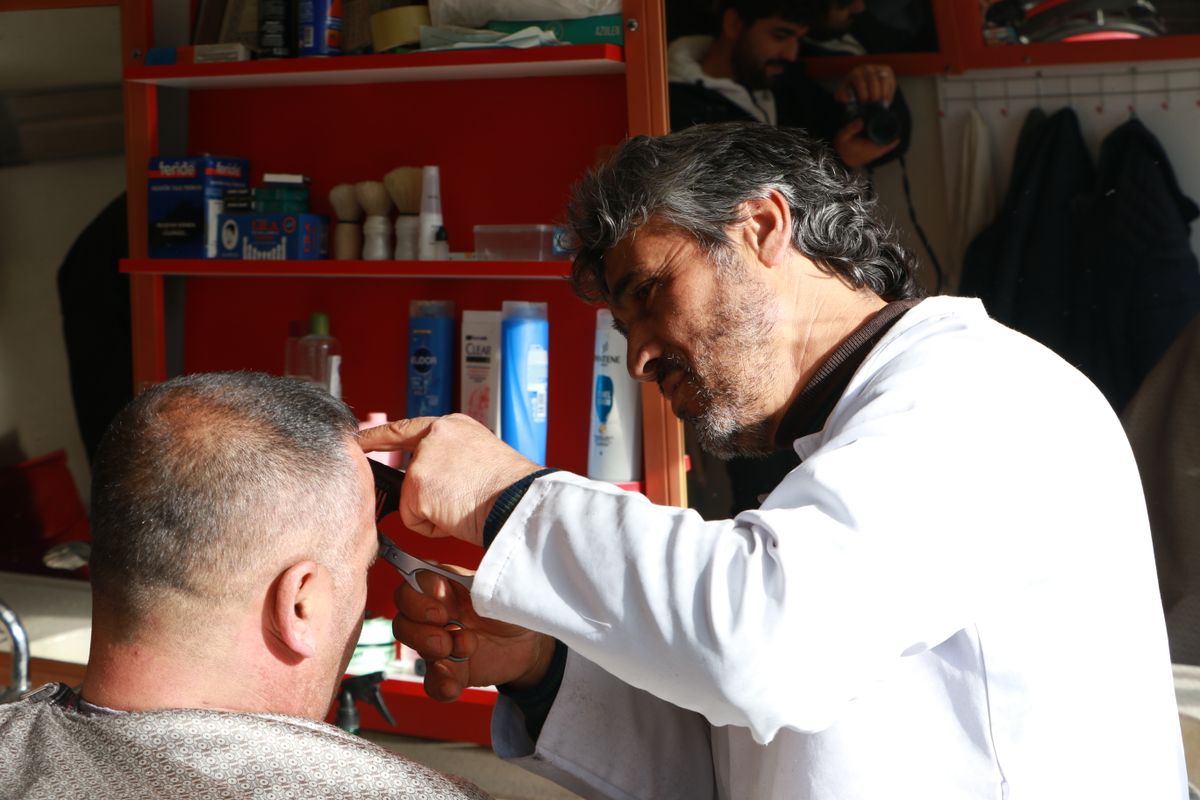
To open and operate a barbershop in Georgia, treat the project as several linked authorizations and operating systems, not as one registration. First define the exact paid services. Confirm that every person who will perform a regulated service holds the active Georgia credential appropriate to that service. Obtain the Board license for the salon/shop before conducting regulated business. Separately complete the entity, tax, employment, insurance, and city or county requirements that apply to the selected address. Then prove that the premises, sanitation workflow, products, tools, schedule, staffing arrangement, and cash plan work together before announcing an opening date.
The shortest reliable sequence is:
- freeze a proposed service menu and identify what is explicitly excluded;
- map each service to the individual credential and facility authority it requires;
- select the business model only after legal and tax review;
- screen a real address with the city or county before committing to an irreversible lease or buildout;
- apply for the Georgia salon/shop license and wait for active issuance before operating;
- register the tax and employer accounts that the facts require;
- document the worker model from the real relationship rather than the label used in a contract;
- build the sanitation, disinfection, storage, sharps, product, and safety systems around the actual services and products;
- model capacity from observed service and reset times instead of an industry benchmark; and
- open only after each dependency has evidence, an owner, and a pass/fail decision.
Georgia's Board guidance distinguishes an individual practitioner's authority from the salon/shop license, and it distinguishes the Board license from the local business license or occupational tax certificate. An application is not permission to open. The Board's official guidance says services may not begin until an active license is issued. Evidence map: GA-CB-RULE-240-6-03, GA-CB-RULE-240-12-01, GA-CB-SOS-HOWTO-SHOP-01, GA-CB-SOS-FAQ-01, GA-SOS-SALON-01, GA-SOS-FAQ-01, GA-RULE-SALON-01.
No official source in the approved ledgers supplies a universal Georgia barbershop startup cost, haircut duration, chair utilization, walk-in share, price, revenue per barber, booth rent, commission percentage, payroll ratio, retail attachment rate, rebooking rate, or profit margin. This guide therefore provides formulas and blank worksheets. The operator must supply dated quotes and first-party observations, and qualified reviewers must approve the legal, tax, worker, safety, and local conclusions.
- To open and operate a barbershop in Georgia, treat the project as several linked authorizations and operating systems, not as one registration.
- The shortest reliable sequence is:
- 1.
Scope and non-claims
This guide is a planning framework for a proposed Georgia barbershop offering services that fall within Georgia's barbering or related cosmetology framework. It addresses the relationship among professional authority, facility licensing, local opening requirements, business administration, worker questions, sanitation, capacity, and cash controls.
It does not:
- decide whether a particular service is lawful for a particular credential;
- reproduce the complete Official Code of Georgia Annotated or every Board rule;
- approve a person, establishment, suite, home salon, mobile setup, flea-market location, or proposed name;
- select an LLC, corporation, partnership, sole proprietorship, tax election, payroll method, or insurance policy;
- classify a barber as an employee, contractor, tenant, licensee, partner, or owner;
- determine sales-tax treatment of services, retail goods, packages, gift cards, memberships, deposits, tips, or mixed transactions;
- approve zoning, permitted use, occupancy, fire/life safety, plumbing, accessibility, signage, waste, or building work;
- provide a blood-exposure, infection-control, hazard-communication, chemical, respiratory, or emergency plan;
- authorize body art, permanent makeup, massage therapy, cosmetic laser, medical aesthetics, diagnosis, dermatological treatment, injections, prescribing, or medical devices;
- promise an approval, opening date, demand level, profitability, financing result, or resale value; or
- convert hypothetical arithmetic into a benchmark.
The approved Georgia ledger uses the 2026 Department 240 compilation and the signed 2024 Act 556/SB 354 for the sections that Act changed. It also requires a final check of the current codified law. The rules portal still exposes historical materials associated with earlier departments. This draft does not claim that every historical rule was repealed or superseded. A Georgia-qualified reviewer must reconcile current code, Department 240, administrative history, emergency or proposed rules, forms, and Board guidance before publication. Evidence map: GA-CB-CODE-PORTAL-01, GA-CB-STATUTE-2024-01, GA-CB-RULES-2026-01.
1. Begin with the service boundary
A business name such as “barbershop,” “grooming studio,” or “men's salon” does not answer the regulatory question. The actual paid acts, products, tools, purpose, and person performing them determine what must be reviewed. Write the service menu before selecting a premises, staffing model, or marketing promise.
Service authority worksheet
Complete one row for every service variation, not just every menu heading.
| Service as sold | Every physical act | Tools and products | Intended purpose and advertised claims | Proposed provider | Proposed Georgia credential | Statutory/rule source checked | Facility authority | Other authority or unresolved issue | Decision |
|---|---|---|---|---|---|---|---|---|---|
| Owner entry | Owner entry | Exact brand, model, label, SDS | Cosmetic, grooming, or other claim | Named role | Exact active credential | Section and access date | Exact active facility license | Local, OSHA, FDA, medical, body-art, or other | Allow / revise / exclude / escalate |
The signed 2024 legislation defines barbering and specific credential categories and identifies narrow activities that may fall outside individual licensure when all statutory limits are met. Those exceptions are not broad permission to operate an unlicensed “beauty business.” For example, the statutory definition of blow-dry styling has detailed limits involving tools and chemical or structure-altering services. Adding a cut, color, reactive chemical, or another licensed act can change the analysis. Do not paraphrase an exception into “styling does not require a license.” Evidence map: GA-CB-STATUTE-2024-01.
For a conventional barbershop, likely review questions include shaving or trimming beards, cutting or dressing hair, facial or scalp massage, facial or scalp preparations, shampooing, color, relaxing, straightening, and any additional skin, nail, brow, lash, chemical, device-based, or retail service. The source does not give the editor authority to approve the menu. It gives the editor a disciplined way to ask the Board or a qualified reviewer the right question.
Every service row needs a clear disposition:
- Allow only when the individual credential, facility authority, training, product, and premises requirements are verified.
- Revise when a tool, claim, product, body area, provider, or workflow must change.
- Exclude when the shop will not provide the service.
- Escalate when medical, body-art, laser, chemical-exposure, waste, or another authority may be involved.
Keep excluded services in the record. An explicit “not offered” list helps prevent a future marketing or staff decision from silently expanding scope. Suggested exclusions for review may include medical claims, diagnosis, treatment of skin disease, laser, injections, microneedling, permanent makeup, tattooing, and any service that a qualified reviewer has not mapped. This is not a legal conclusion about each item; it is a control against accidental menu expansion.
Credential register
| Person | Role | Credential type | License number | Verification source/date | Expiration date | Approved service rows | CE status | Restrictions or discipline reviewed | Facility relationship |
|---|---|---|---|---|---|---|---|---|---|
| Owner entry | Owner entry | Exact Georgia category | Owner entry | GOALS record and date | Owner entry | Row IDs | Evidence, not assumption | Reviewer entry | Employee/tenant/owner label pending classification review |
Rule 240-6-.03 supports the narrow claim that a person desiring to practice at a listed level must apply and demonstrate compliance, including proof of the examinations specified by the rule. It does not support publishing training hours, age, fee, endorsement, or automatic-approval claims without the current law and form. Board guidance also places responsibility on the shop owner to ensure that people performing regulated services hold active authority and that required licenses are displayed. Evidence map: GA-CB-RULE-240-6-03, GA-CB-SOS-FAQ-01, GA-SOS-FAQ-01.
Renewal is a separate control. The approved Georgia records describe a general CE rule with exceptions and special treatment for instructors, plus CE Broker reporting introduced in 2026. Do not tell every licensee “you need exactly five hours” without checking category, cycle, first renewal, length of licensure, exemption request, provider, course, and current Board instructions. The shop's compliance calendar should track evidence rather than rely on courtesy notices. Evidence map: GA-CB-RULE-240-3-01, GA-CB-CE-2026-01, GA-SOS-CE-01.
3. Choose a business structure without pretending it is a license
Georgia's official starting-a-business guide separates planning, structure, entity registration, tax, labor, insurance, and permits. The Secretary of State provides distinct formation paths but does not select the structure or provide legal or tax advice. A filing can create an entity; it does not authorize barbering, approve a shop, classify workers, approve a lease, or settle tax treatment. Evidence map: GA-BIZ-01, GA-SOS-ENTITY-01.
Before choosing a structure, document the facts a Georgia attorney and tax professional need:
- owners, contributions, voting and management rights;
- who signs the lease, loans, equipment contracts, and guarantees;
- who owns the name, website, phone number, booking account, merchant account, client records, inventory, and improvements;
- whether barbers are owners, employees, tenants, contractors, or another relationship based on facts;
- how service and retail receipts flow;
- how refunds, tips, deposits, memberships, gift cards, chargebacks, and product returns are handled;
- who bears operating expenses and business risk;
- how an owner leaves, becomes disabled, dies, or disputes a decision; and
- whether the proposed entity can hold each required account, contract, license, or policy.
Structure decision record
| Question | Option considered | Legal review | Tax review | Operational consequence | Evidence | Decision/owner/date |
|---|---|---|---|---|---|---|
| Ownership and control | Owner entry | Pending | Pending | Signature and management authority | Draft governing documents | Pending |
| Liability allocation | Owner entry | Pending | Not a substitute for legal review | Insurance/contract implications | Counsel analysis | Pending |
| Tax and payroll | Owner entry | Legal coordination | Pending | Accounts, filings, cash timing | Tax memo | Pending |
| Exit/deadlock | Owner entry | Pending | Pending if relevant | Continuity and valuation process | Agreement | Pending |
Do not publish “an LLC protects your personal assets” or “an S corporation saves taxes” as a generic barbershop answer. The approved source says structure affects multiple business questions and requires advice; it does not establish an outcome for this operator.
4. Screen the address before committing
A beautiful storefront can be a poor barbershop premises if the use is not allowed, plumbing or electrical work is impractical, the facility layout conflicts with Board rules, accessibility work is unresolved, or the lease starts before approvals are obtainable. Address screening should precede an unconditional lease and major equipment orders.
Rule 240-4-.01 contains Georgia facility requirements relevant to location permanence, inspections, home salons, separation from other space, suites, cleanliness, equipment condition, and toilet/lavatory facilities. Compliance with that rule does not prove zoning, building, fire, plumbing, accessibility, or lease approval. Evidence map: GA-CB-RULE-240-4-01.
Address-screening worksheet
| Topic | Exact question | Authority or professional | Evidence/date | Cost/lead-time quote | Condition to proceed |
|---|---|---|---|---|---|
| Zoning/permitted use | Is the exact proposed use allowed in this parcel and suite? | City/county | Written determination | Dated quote if applicable | Written acceptable use |
| Occupancy | What current and proposed occupancy classification/approval applies? | Local authority | Record | Quote | Approval path accepted |
| Building/fire | Which plan review, permits, inspections, egress, fire protection, or finish rules apply? | Local departments/design professional | Record | Quote | Feasible plans |
| Plumbing/water | Can required sinks, bowls, hot/cold water, drainage, backflow, restroom, and other work be approved? | Authority/contractor | Plans and response | Quote | Capacity and approval |
| Electrical/HVAC | Can load, equipment, ventilation, and comfort needs be supported? | Authority/design professional | Assessment | Quote | Feasible design |
| Accessibility | Which route, entrance, service, restroom, counter, parking, and communication requirements apply? | Qualified reviewer | Assessment | Quote | Approved remediation |
| Board facility rules | Does the plan meet permanent-location, separation, suite, sanitation, storage, posting, and inspection needs? | Georgia reviewer/Board | Plan review | Quote if any | No unresolved conflict |
| Lease | Is barber/salon use permitted, and who bears approvals/buildout/restoration? | Georgia counsel | Marked lease | Economic terms | Protective contingencies |
| Local business authorization | What business license/occupational tax process applies? | City/county | Checklist | Current fee | Obtainable before opening |
For a home salon, do not stop at “Georgia permits home salons.” Board guidance says home salons may operate only if they meet state laws and Board rules. The operator must also verify zoning, home-occupation rules, occupancy, parking, signage, accessibility, insurance, lender or landlord restrictions, HOA covenants, separation from domestic space, and any other local requirement. Evidence map: GA-CB-RULE-240-4-01, GA-CB-SOS-FAQ-01.
For a suite, record which facility license covers the practitioner and how licenses are displayed. The Board rule requires suite displays to identify clearly the salon/shop license under which each practitioner works. Do not assume that the landlord's general facility approval or another tenant's license covers every suite. Evidence map: GA-CB-RULE-240-4-02.
Lease evidence before signature
Ask counsel to review at least permitted use; licensing/permit contingency; delivery condition; utilities; exclusive use if relevant; common areas; accessibility responsibilities; construction approvals; signage; hours; waste; insurance; indemnity; personal guarantee; maintenance; repair; casualty; delays; rent commencement; operating covenants; assignment/subletting; restoration; default; and renewal/exit. This is a review list, not a statement that every term is required or favorable.
5. Build the Georgia facility application file
The application file should be more than a submitted form. It should connect identity, ownership, premises, education, service menu, and readiness evidence so a change can be assessed without reconstructing the project.
Application file index
- exact legal entity and assumed/trade name records;
- owner and responsible-party information;
- proposed facility name and physical address;
- executed lease or ownership evidence and relevant pages;
- current Board application and fee receipt;
- evidence of the Board-approved owner health, safety, and sanitation course required by Rule 240-12-.01;
- any citizenship/identity or disciplinary documents required by the current application, stored privately;
- service authority matrix and practitioner credential register;
- floor plan and facility-rule review;
- local authorization register;
- correspondence, deficiencies, responses, and Board decisions;
- active facility license verification after issuance;
- required license, rule, signage, and inspection-report posting plan; and
- change-control procedure for ownership, leasing, name, location, closure, menu, or layout.
The official how-to guide states that new salon/shop applicants receive the current facility identifier described there and that historical barber-shop identifiers are not newly issued. That administrative detail is volatile. It should not become marketing copy, and it must be rechecked at action time. Evidence map: GA-CB-SOS-HOWTO-SHOP-01.
Rule 240-4-.02 addresses the display of the facility license or permitted current online verification, individual licenses, inspection report, rules, and signage. Use the current Board materials; do not rewrite mandatory signage from memory. The approved ledger flags an internal cross-reference in Rule 240-4-.02 that requires clarification rather than silent correction. Cite the specific health and disinfection rules and seek Board review if the cross-reference affects an application or inspection. Evidence map: GA-CB-RULE-240-4-02, GA-CB-RULES-2026-01.
Opening permission gate
The gate passes only when the active facility license is verifiable, every person scheduled for regulated services has active appropriate authority, required displays are installed, local permissions are issued, premises inspections are final, operating controls are tested, and no approval condition conflicts with the proposed service or schedule. An application receipt, verbal assurance, contractor completion, or scheduled inspection is not the same as final authorization.
6. Design sanitation and infection-control operations
Sanitation is a production system. It affects setup time, chair availability, tool inventory, laundry, storage, purchasing, training, inspection readiness, and the decision to accept the next client. A schedule that leaves no time or equipment for required cleaning is not usable capacity.
Rule 240-4-.03 addresses truthful qualifications and scope, hand washing, protective clothing or footwear, pets, waste, work areas, sharps, and prohibited skin-removal implements. Preserve its verbs: hand washing is required; antibacterial soap is described as recommended; parts of the sharps language use both “should” and “must.” Do not turn guidance into a mandate or a mandate into a suggestion. Evidence map: GA-CB-RULE-240-4-03.
Rule 240-4-.04 distinguishes reusable nonporous tools from single-use items. The rule describes cleaning and complete immersion conditions for listed multi-use tools, prohibits reuse of single-use items, and addresses equipment, textiles, and bowls. A disinfectant's EPA registration and label matter, but registration does not mean the product is suitable for every item or use. Product label, contact time, dilution, surface compatibility, manufacturer instructions, SDS, and worker-safety requirements must be checked for the actual product. Evidence map: GA-CB-RULE-240-4-04.
Rule 240-4-.05 addresses labeled clean and dirty storage, contaminated items, linens, and sanitary dispensing of products without double dipping or client contamination. UV storage is not a replacement for cleansing and disinfection. Evidence map: GA-CB-RULE-240-4-05.
Tool-cycle worksheet
| Tool/item | Reusable nonporous or single-use? | Uses/service | Cleaning step | Disinfectant and label | Required contact process | Rinse/dry | Clean storage | Dirty/contaminated storage | Quantity needed for peak cycle | Reviewer |
|---|---|---|---|---|---|---|---|---|---|---|
| Exact item | Classification | Service rows | Written method | Product/EPA label/date | Label plus Georgia rule | Method | Labeled location | Labeled location | Formula, not guess | Pending |
Calculate tool quantity from the actual cycle:
Minimum ready sets during a peak block
  = concurrent service demand
  + sets unavailable during cleaning/disinfection/drying
  + documented contingency stock
This formula does not establish the contingency quantity. The operator selects it after observing workflow and failure modes. If a required cycle cannot finish before the next service, the shop needs more tools, fewer bookings, a revised process, or another compliant solution approved by the reviewer.
Blood or sharps incident boundary
Barbering can involve blades and possible blood contact, but the approved federal source does not establish that every shop or every independent worker is covered by the OSHA Bloodborne Pathogens Standard. Coverage depends on employer/employee relationships, tasks, and reasonably anticipated occupational exposure. If coverage applies, a qualified safety reviewer must develop the required program; this guide is not that program. Evidence map: OSHA-BBP-01, OSHA-STATE-01.
Georgia's Rule 240-4-.03 contains sharps-container directions and states that disposal is regulated by Georgia DNR and local ordinance. The DNR biomedical-waste rule applies conditionally according to the waste and generator, and its partial exemption for lower monthly generation is not a total exemption. The operator must characterize the real waste stream and verify collection, storage, transport, disposal, records, and local requirements. Evidence map: GA-CB-RULE-240-4-03, GA-DNR-RULE-391-3-4-15.
Daily sanitation evidence log
| Date/time | Station/tool/area | Trigger | Procedure version | Product/lot or solution record | Person | Pass/fail | Corrective action | Reopened for service by |
|---|---|---|---|---|---|---|---|---|
| Entry | Exact item | Between clients/daily/incident/other | Controlled document | Entry | Initials | Result | Record | Authorized person/time |
The log should support the rule and real process; it should not create meaningless paperwork. A named reviewer should decide which records are required and useful, retention, privacy, and access.
7. Control products and workplace hazards
Create an inventory of every shampoo, color, dye, relaxer, straightener, smoothing product, disinfectant, cleaner, aerosol, adhesive, lubricant, cosmetic, and retail product. Record the exact brand, product, SKU, supplier, lot where relevant, label version, SDS version, intended service, storage, use instructions, disposal, incompatibilities, training, and review date.
FDA's salon-professional resource map identifies official federal product resources but does not approve a product, service, shop, protocol, or state scope. FDA and OSHA materials explain that some heated hair-smoothing products may contain or release formaldehyde and that labels, SDSs, hazard communication, exposure evaluation, training, and controls can matter. They do not establish that every smoothing product contains formaldehyde, provide a 2026 product blacklist, or approve a generic ventilation design. Evidence map: FDA-SALON-01, FDA-HAIR-01, OSHA-HAIR-01, OSHA-HAIR-02.
Product approval register
| Product | Exact use | Service row | Label/SDS date | Hazard review | Storage | Required PPE/control question | Waste | Training | Approved/rejected by/date |
|---|---|---|---|---|---|---|---|---|---|
| Owner entry | Exact method | ID | Records | Qualified finding | Location | Reviewer decision | Determination | Evidence | Named reviewer |
Do not use “professional,” “natural,” “non-toxic,” “formaldehyde-free,” “organic,” “safe,” or “FDA approved” as a substitute for evidence. Review express and implied advertising claims, including what a service name, testimonial, before/after image, or staff script communicates. Product classification and professional scope are different questions.
The occupational-safety authority must be selected for the real workplace. The federal OSHA State Plans directory explains that approved state programs vary, but it does not itself settle coverage for the shop. Confirm the controlling program and whether the worker relationship and tasks create duties before writing a compliance procedure. Evidence map: OSHA-STATE-01.
8. Describe work before selecting a worker label
Barbershops use many commercial labels: employee, independent contractor, booth renter, chair renter, suite professional, partner, apprentice, or owner. A label does not decide the legal relationship. This guide cannot classify workers because the approved ledgers do not contain a fact-specific classification determination.
Start with what happens:
- Who sets hours and service prices?
- Who controls appointment access and walk-ins?
- Who decides which clients a barber serves?
- Who supplies tools, products, capes, towels, disinfectants, booking software, payment processing, and reception?
- Who collects money, handles tips, issues refunds, bears chargebacks, and owns client records?
- Who trains, supervises, evaluates, disciplines, or replaces the worker?
- Can the person work elsewhere, hire help, market independently, or realize a profit/loss?
- Who bears rework, product, insurance, tax, utilities, cleaning, and downtime?
- Does a lease, license, or contract match the actual practice?
- How are apprentices supervised and recorded?
Take the facts to Georgia employment and tax professionals. Then write agreements and systems that match the reviewed model. Do not choose a label because one model appears to have lower payroll cost.
Worker-model matrix
| Fact | Proposed practice | Evidence | Legal reviewer finding | Tax/payroll finding | Insurance finding | Operational control required |
|---|---|---|---|---|---|---|
| Schedule control | Owner entry | Draft schedule/contract | Pending | Pending | Pending | Pending |
| Price/payment control | Owner entry | Menu/merchant flow | Pending | Pending | Pending | Pending |
| Tools/products | Owner entry | Inventory/contract | Pending | Pending | Pending | Pending |
| Client ownership | Owner entry | System terms/policy | Pending | Pending | Pending | Privacy/access control |
| Training/supervision | Owner entry | SOP | Pending | Pending | Pending | Credential/apprentice controls |
Georgia Department of Labor provides employer registration, account, quarterly wage/tax, payment, and new-hire reporting routes, and its FAQ describes general unemployment-insurance processes. These records do not determine whether a barber is an employee. Evidence map: GA-DOL-01, GA-DOL-02.
Georgia's State Board of Workers' Compensation states a general coverage threshold involving businesses regularly employing three or more people and describes how some part-time and entity roles enter the analysis. Do not reduce this to “three full-time employees.” A qualified professional must confirm headcount, roles, exemptions, policy, and classification. Evidence map: GA-SBWC-01.
Apprentices
If the shop proposes apprentices, create a separate legal and operating review. Confirm the current apprentice license, supervisor credential and experience, facility relationship, permitted ratio, training subjects, records, submission schedule, equipment, and exam timing. This draft does not use school rules or invent an apprenticeship checklist. The facility must not schedule an apprentice as interchangeable independent production capacity before the entire current training arrangement is verified.
9. Register tax and employment accounts from actual facts
Georgia Tax Center is the state channel for applicable tax accounts. The Department of Revenue explains business tax categories in general terms. It does not tell this barbershop whether every service or product is taxable, how a mixed transaction should be allocated, or how tips, packages, gift cards, memberships, deposits, refunds, contractor payments, or retail promotions should be treated. Evidence map: GA-DOR-01, GA-DOR-02.
Transaction map for tax review
| Transaction | Who sells/collects? | Customer receives | Timing of cash | Refund/expiration terms | Proposed accounting | State tax review | Local/federal review | System configuration evidence |
|---|---|---|---|---|---|---|---|---|
| Hair service | Entity/person | Defined service | Booking/completion/other | Policy | Pending | Pending | Pending | Test transaction |
| Retail product | Entity/person | Exact goods | Sale | Return policy | Pending | Pending | Pending | SKU/tax test |
| Deposit | Entity/person | Reservation right/credit | Before service | Policy | Pending | Pending | Pending | Test |
| Gift card | Entity/person | Stored value/defined item | Issue/redemption | Policy | Pending | Pending | Pending | Test |
| Membership/package | Entity/person | Defined rights | Recurring/prepaid | Cancellation/refund | Pending | Pending | Pending | Test |
| Tip | Customer to recipient via flow | Gratuity | Checkout/payroll | Correction | Pending | Pending | Pending | Test |
Do not configure a point-of-sale tax switch based on a competitor's receipt or a software default. Obtain a written position from a qualified Georgia tax professional using the exact transaction terms. Keep the conclusion, effective date, sources, and system test.
If the reviewed worker model involves employees, confirm Department of Labor account setup, unemployment liability, new-hire reporting, wage/tax reporting, withholding, payroll records, wage-and-hour duties, posters, and workers' compensation with the responsible professionals. The official business guide supports treating these as separate workstreams; it does not establish a complete employment checklist. Evidence map: GA-BIZ-01, GA-DOL-01, GA-DOL-02, GA-SBWC-01.
10. Model capacity from time and constraints
A barbershop does not have capacity merely because it owns chairs. Capacity is the smallest usable output created by licensed provider time, chair time, tools, sanitation cycles, opening hours, client flow, and premises constraints.
Define the units
Use minutes for service design and hours for period summaries. Keep these fields separate:
- client-facing service time;
- consultation and transition time;
- cleaning/disinfection and reset time;
- checkout and rebooking time;
- non-client work, meals, meetings, training, and breaks;
- planned closures and known absences;
- capacity lost to tool cycles, equipment failure, or facility limits;
- booked units;
- arrived units;
- completed units;
- rework or correction units;
- collected service revenue; and
- retail or other revenue separately.
Core formulas
Scheduled provider minutes
  = sum(each licensed provider's scheduled on-site minutes)

Usable provider minutes
  = scheduled provider minutes
  - required non-service minutes
  - planned unavailable minutes

Usable chair minutes
  = sum(each approved chair's service-available minutes)
  - chair downtime

Constraint-adjusted minutes
  = minimum(usable provider minutes, usable chair minutes, other binding-resource minutes)

Cycle minutes per service
  = consultation/setup minutes
  + active service minutes
  + cleaning/reset minutes
  + checkout/transition minutes not handled concurrently

Maximum theoretical service units
  = floor(constraint-adjusted minutes ÷ cycle minutes)

Guard: if cycle minutes is zero or negative, return `not calculated` and do not
divide. A missing or invalid observed cycle cannot be converted into capacity.

Planned bookable units
  = operator-selected units below the theoretical ceiling,
    supported by observed workflow and a documented buffer

Collected service revenue
  = sum(completed units by service × actual collected revenue per completed unit)
“Maximum theoretical” is not a sales target. It is a mechanical ceiling under stated assumptions. Planned capacity must include sanitation and uncertainty. If actual service mix differs, calculate each service separately or use a constrained schedule model rather than one average duration.
Capacity observation log
| Date | Provider/credential | Service row | Start definition | Active minutes | Reset/disinfection minutes | Checkout/transition | Delay cause | Rework | Completed/collected evidence | Notes |
|---|---|---|---|---|---|---|---|---|---|---|
| Entry | Named role | ID | Consistent trigger | Observed | Observed | Observed | Coded reason | Yes/no | Private record | Context |
Collect enough observations to understand variation without calling the result an industry benchmark. Preserve differences among provider experience, service type, hair condition, consultation needs, add-ons, and workflow. Do not pressure a barber to shorten a service below what is safe, competent, lawful, and consistent with required sanitation.
Queue economics
Walk-ins and appointments use the same finite capacity differently. Track them separately:
Appointment completion contribution
  = collected appointment revenue
  - directly attributable variable cost

Walk-in completion contribution
  = collected walk-in revenue
  - directly attributable variable cost

Unserved demand count
  = eligible inquiries that could not be assigned within the shop's stated process

Observed wait
  = service start timestamp - queue entry timestamp
Do not assume every unserved walk-in is lost revenue. Some clients decline the price, provider, service boundary, or wait; others return later. Record the reason where practical and privacy-appropriate. Do not assume an empty chair means unused profitable capacity; there may be no licensed provider, clean tool set, or compatible time block.
11. Build the opening and cash-control worksheets
Official sources identify filings and authorities but provide no universal startup total. Use dated quotes.
Opening cost worksheet
| Category | Item | One-time or recurring | Quoted amount | Quote date/expiry | Deposit timing | Tax/shipping/install | Contingency basis | Responsible party | Decision |
|---|---|---|---|---|---|---|---|---|---|
| Premises | Lease deposit, professional review, design, permits, buildout | Separate entries | Quote | Dates | Dates | Included/excluded | Specific risk | Owner | Pending |
| Board/local | Applications, inspections, certificates | Separate entries | Current amount | Date | Date | N/A | No guessed fee | Owner | Pending |
| Chairs/equipment | Exact model and installation | Separate entries | Quote | Date | Terms | Full landed cost | Failure/lead time | Owner | Pending |
| Sanitation | Tool sets, containers, laundry, products, waste | Separate entries | Quote | Date | Terms | Full cost | Workflow basis | Owner | Pending |
| Technology | Booking, POS, network, hardware, subscriptions | Separate entries | Quote | Date | Terms | Fees | Migration/outage | Owner | Pending |
| People | Recruiting, payroll setup, training, pre-opening labor | Separate entries | Quote/model | Date | Pay dates | Burden pending review | Delay | Owner | Pending |
| Working capital | Cash required before collections stabilize | Formula | Scenario | Date | Timeline | Not revenue | Slow case | Owner | Pending |
Keep one-time cost, recurring monthly obligation, variable service cost, refundable deposit, financing proceeds, and working capital separate. A loan or owner contribution is funding, not revenue. A security deposit may still be cash unavailable for operations. An equipment quote that excludes freight, assembly, plumbing, electrical, tax, or disposal is not the landed cost.
Monthly cash control
Opening cash
+ cash actually received
- operating cash paid
- capital cash paid
- financing repayments
- owner distributions
= ending cash

Cash runway in months
  = unrestricted operating cash ÷ current planned net cash outflow per month
If planned net cash outflow is zero or positive, do not use the runway division as though it predicts survival. Use a dated cash schedule with actual obligations. Protect against zero denominators and distinguish available cash from restricted deposits, taxes collected, tips payable, payroll liabilities, gift-card obligations, and borrowed funds subject to conditions.
Service economics worksheet
| Service row | Menu price | Actual discount/refund | Tax treatment pending | Collected service amount | Direct product/disposable cost | Direct payment fee | Direct labor/compensation treatment | Contribution before shared overhead | Evidence |
|---|---|---|---|---|---|---|---|---|---|
| Owner entry | Input | Actual | Reviewer conclusion | Actual | Product-use test | Processor record | Reviewed worker model | Formula output | Dated records |
Do not describe contribution before shared overhead as profit. It excludes rent, utilities, insurance, software, administrative labor, professional services, marketing, repairs, owner compensation, taxes, financing, and other costs unless explicitly included.
12. Test three hypothetical decisions
The following arithmetic exists only to show how a decision model behaves. Replace every input with first-party evidence. None of the values is a Georgia norm.
EDITORIAL_SCENARIO 1 — a proposed two-chair launch
Assume, solely for teaching, that a shop proposes two approved chairs and two licensed providers. Each is scheduled for 420 minutes on a test day. The owner removes 60 minutes per provider for meals, opening/closing, records, and other non-service work. The observed planning cycle for one selected service is 45 minutes, including service, reset, and transition.
Scheduled provider minutes = 2 × 420 = 840
Non-service minutes = 2 × 60 = 120
Usable provider minutes = 840 - 120 = 720
Usable chair minutes = 2 × 360 = 720
Constraint-adjusted minutes = minimum(720, 720) = 720
Theoretical units = floor(720 ÷ 45) = 16
The result does not justify booking 16 clients. It only identifies a ceiling under simplified assumptions. The owner must compare the 45-minute cycle with observed variation, sanitation tool availability, breaks, late arrivals, consultations, service mix, checkout, and recovery time. If the owner chooses a planning buffer of four service units for this hypothetical test, planned bookable units would be 12, but “four” is an invented scenario input, not a recommended buffer.
Decision questions:
- Are both providers authorized for the exact service?
- Can clean tool sets support the peak cycle?
- Does the shop have any binding shampoo, product, or checkout constraint?
- Can a walk-in be inserted without displacing an appointment or required break?
- What does a slower observed cycle do to cash, staffing, and promises?
EDITORIAL_SCENARIO 2 — quote growth before opening
Assume a hypothetical premises plan had quoted buildout items totaling $54,000. Later, required plumbing and electrical changes add quoted costs of $9,000, and opening is delayed one month. The hypothetical monthly committed premises and system cash outflow during delay is $6,000.
Revised quoted buildout = $54,000 + $9,000 = $63,000
Delay cash requirement = 1 × $6,000 = $6,000
Immediate added funding need = $9,000 + $6,000 = $15,000
These figures are invented. The lesson is that a delay affects more than contractor cost. It can consume rent, utilities, insurance, subscriptions, financing costs, storage, or payroll before service revenue exists. The operator should update the sources-and-uses schedule, opening cash timeline, lease contingency, and stop/go threshold. Do not “solve” the gap by assuming opening-week demand.
Decision questions:
- Are the added items required for Board, building, plumbing, fire, accessibility, or operations?
- Does the lease allocate cost and delay risk as assumed?
- Do quotes include permit, tax, design, inspection, and restoration?
- Does the revised project still pass the slow-demand cash case?
- Is delaying, resizing, renegotiating, or declining the site better than adding funds?
EDITORIAL_SCENARIO 3 — worker-model economics change after review
Assume a hypothetical draft forecast treated three service providers as paying fixed chair fees of $1,400 each per month, for $4,200 of receipts to the shop. A later professional review concludes that the proposed facts must be redesigned and costed as an employee model. For teaching only, suppose the revised monthly cash model includes $14,000 in wages, $2,800 in employer-side payroll/benefit/insurance assumptions, and $22,000 in collected service revenue attributable to those providers. Other directly attributable service costs are hypothetically $3,300.
Old modeled chair-fee receipts = 3 × $1,400 = $4,200

Revised contribution before shared overhead
  = $22,000 - $14,000 - $2,800 - $3,300
  = $1,900
The $1,900 is not profit and the figures are not recommendations. The two models cannot be compared merely by subtracting $4,200 from $1,900 because they assign revenue, costs, control, risk, and services differently. The shop must rebuild tax, payroll, workers' compensation, schedule, payment, pricing, supervision, and cash timing from the reviewed relationship.
Decision questions:
- Which actual facts led to the professional conclusion?
- Does pricing and capacity support the revised arrangement under a slow case?
- Who controls bookings, walk-ins, refunds, tips, products, and client records?
- Are unemployment, withholding, workers' compensation, wage/hour, and payroll systems ready?
- Must the business plan, funding, insurance, and agreements change before opening?
13. Run the pre-opening evidence gate
Regulatory and premises gate
- Every service is mapped to an active individual credential and facility authority.
- Excluded and escalated services are documented.
- Current codified Georgia law and Department 240 rules are reverified by a named reviewer.
- The salon/shop license is active at the exact facility; an application receipt is not used as approval.
- Individual and facility licenses, rules, signage, and inspection reports are ready for display as required.
- City/county business license or occupational tax certificate is issued.
- Zoning/permitted use, occupancy, building, fire, plumbing, signage, accessibility, and other address-specific approvals are final.
- Lease conditions and landlord approvals align with final use and buildout.
- Ownership, name, location, or leasing changes have been reviewed for new-application duties.
Operations and safety gate
- The sanitation plan cites Rules 240-4-.03 to .05 and the exact product labels/instructions.
- Reusable and single-use items are classified; clean, dirty, contaminated, and linen storage is installed and labeled.
- Handwashing, protective clothing, waste, food, pet, and prohibited-implement controls are trained and observed.
- Tools and quantities support the tested service cycle without skipping required steps.
- Sharps/waste classification, containment, collector, disposal, and local rules are verified.
- Product inventory, labels, SDSs, storage, training, exposure, and emergency questions are reviewed.
- OSHA program and worker coverage are determined by qualified review.
- Incident, injury, complaint, rework, equipment failure, and service-stop processes are tested.
Business, worker, and cash gate
- Entity and governing documents match ownership and operations.
- Transaction flows are reviewed for Georgia, local, and federal tax treatment.
- Employer/unemployment, withholding, new-hire, payroll, wage/hour, and workers' compensation conclusions are documented where applicable.
- Worker agreements match actual practice and reviewed classification.
- Insurance quotes and policies match services, premises, people, products, and contracts.
- All opening costs use current quotes and include full landed/installation cost.
- Working capital and slow-demand cases are funded without invented demand.
- Merchant, booking, refund, tip, deposit, membership, gift-card, privacy, and access controls are tested.
- Opening date depends on evidence milestones, not marketing pressure.
14. First 90 days of measurement
The first operating period should replace assumptions with first-party evidence. Do not market early results as representative.
Daily measures
- scheduled, booked, arrived, completed, canceled, late, and unserved units by service and channel;
- observed service, reset, sanitation, and transition minutes;
- wait time and reason for unserved or abandoned requests;
- collected service and retail revenue separated from tax, tips, deposits, gift cards, and financing;
- direct product and disposable use;
- refunds, discounts, chargebacks, corrections, and rework;
- tool, equipment, plumbing, electrical, HVAC, network, and software interruptions;
- incidents, exposure events, sanitation failures, and corrective actions; and
- staffing, overtime, absence, and non-service time under the reviewed worker model.
Weekly decision review
Ask:
- Which assumption changed materially?
- Is the change supported by enough comparable first-party observations?
- Does it affect license scope, safety, schedule, staffing, price, cash, or local approval?
- Is the issue a temporary event or a structural constraint?
- What corrective action, owner, deadline, evidence, and recheck are required?
Monthly close
Reconcile booking records, point-of-sale, merchant deposits, cash, refunds, tips, taxes, payroll, inventory, gift cards, memberships, accounts payable, debt, and bank statements under accountant guidance. Compare actual collected revenue and cash outflow with the scenario, not menu-price totals. Update runway with unrestricted cash and actual obligations.
Do not raise capacity merely because demand appears high. Confirm that licensed provider availability, sanitation cycle, tool inventory, premises, service quality, worker rules, and cash all support the change. Do not add a service because clients request it until the authority and safety review is complete.
Sources and review notes
Sources mapped to this current revision are listed for local review. This localhost-only view remains noindex.
- Hair Smoothing Products That Release Formaldehyde When Heated
- Salon Professionals: Fact Sheet
- Starting a Business Guide
- Georgia State Board of Cosmetology and Barbers Continuing Education Requirements
- Georgia State Board of Cosmetology and Barbers Rules and Laws
- Rule 240-12-.01. Application for Cosmetology/Barber Salon/Shop
- Chapter 240-2. Violations and Fines; Rules 240-2-.01 and 240-2-.02
- Rule 240-3-.01. Continuing Education
- Rule 240-4-.01. Requirements of Operating a Facility
- Rule 240-6-.03. Application for Cosmetology License at the Master Cosmetologist, Master Barber, Barber, Hair Designer, Esthetician or Nail Technician Level
- Department 240 — Georgia State Board of Cosmetology and Barbers
- Georgia State Board of Cosmetology and Barbers FAQ
- How-to Guide: Salons & Barber Shop Application
- Senate Bill 354 — As Passed (Act 556)
- Rule 391-3-4-.15. Biomedical Waste
- Online Services
- Employers FAQs — Unemployment Insurance
- Tax Registration
- Taxes for Business
- Workers' Compensation Insurance FAQs
- How to Guide: Register a Domestic Entity
- Quick Reference Guide to the Bloodborne Pathogens Standard
- Hair Salons: Facts about Formaldehyde in Hair Products — Overview
- Hair Salons — Formaldehyde in Your Products
- State Plans