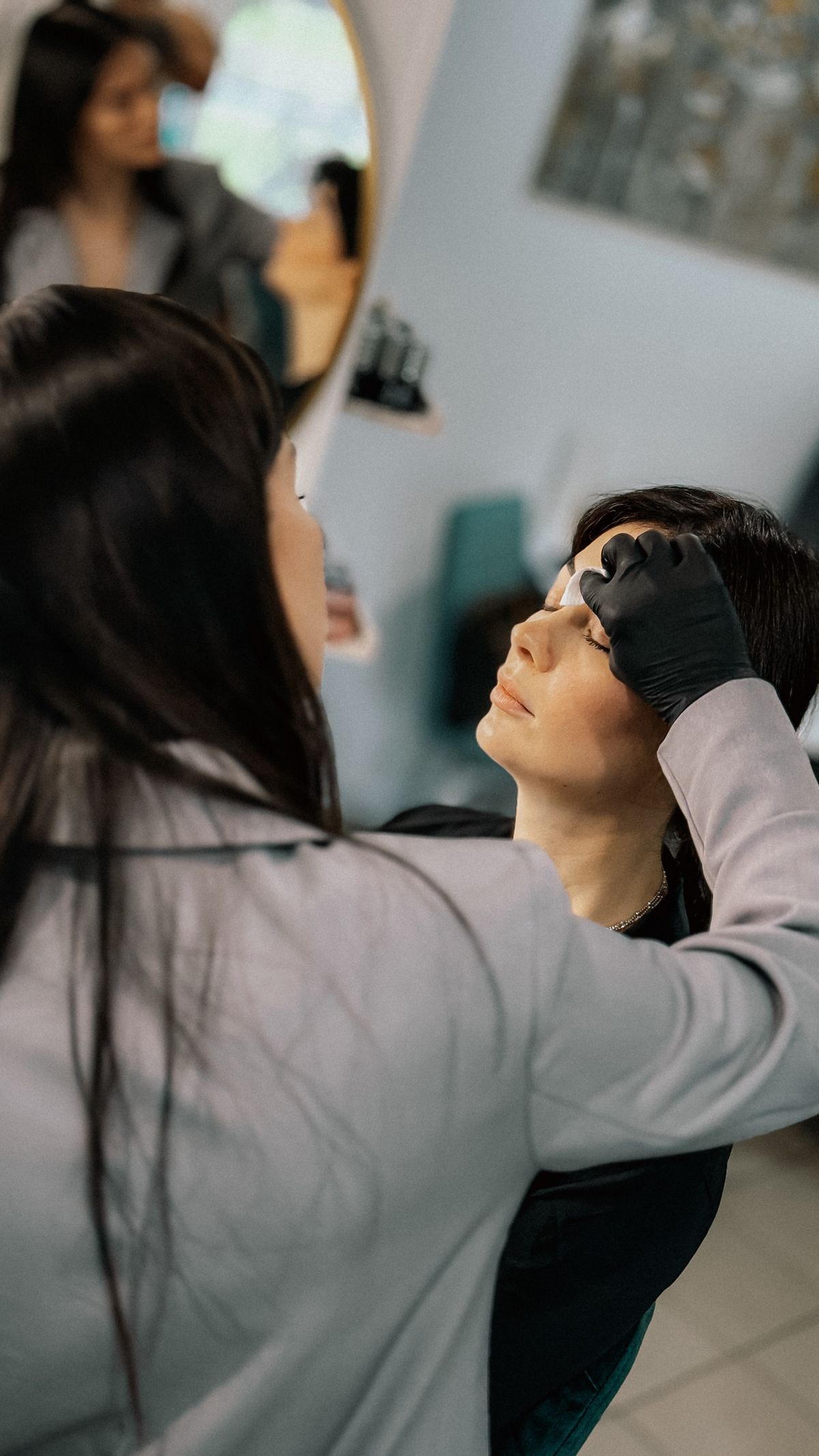
A Georgia permanent-makeup studio needs policies that do more than describe a clean room or a good client experience. The policy system must first classify every offered procedure, then connect each classified procedure to the correct artist certification, studio permit specialty, local County Board of Health, facility layout, client-file workflow, infection-control process, product record, aftercare material, inspection evidence, and incident response. The marketing name of a service does not determine its regulatory category.
Georgia's body-art rules define cosmetic tattooing broadly. The definition includes, among other examples, eyebrow microblading, cosmetic work on the lips and other body areas, microdermapigmentation, micropigment implantation, and microneedling with pigment. Tattoo is also defined to include cosmetic tattooing and eyebrow microblading. A studio should therefore begin with the assumption that a paid service that implants pigment may require body-art analysis even when its menu name is “PMU,” “powder brows,” “lip blush,” “nano brows,” “microshading,” or “paramedical pigmentation.” It should not assume that an esthetician license, cosmetology salon license, training certificate, vendor certificate, or ordinary business registration replaces the body-artist certification or studio permit. Evidence map: GA-DPH-BA-RULES-001, GA-DPH-BA-PAGE-001, GA-DPH-BA-GUIDE-001.
The shortest defensible operating sequence is:
- write every proposed service as a set of physical acts, tools, products, body areas, intended purposes, and advertised claims;
- ask the applicable County Environmental Health office to confirm the body-art category and local process for the exact address;
- verify the artist's current Georgia certification category and the studio permit specialty before scheduling the service;
- freeze excluded and unresolved services so that staff, contractors, booking software, and marketing cannot add them informally;
- obtain plan review and local premises approvals before construction, relocation, or a major layout change;
- build written operating procedures around the actual equipment model and workflow, with Health Authority review where required;
- use a current rule-compliant application and client evaluation, the Health-Authority-approved informed-consent form, and current required verbal/written aftercare materials, preserving the applicable Health Authority review and version evidence rather than using a generic internet template;
- retain client, artist, sterilization, maintenance, training, inspection, product, and incident evidence for the applicable periods and with appropriate access controls;
- calculate capacity from measured appointment, reset, documentation, sterilization, consultation, and interruption time rather than an industry benchmark; and
- stop and reclassify before adding a new device, pigment technique, body area, medical claim, eye-area procedure, tattoo-removal service, injection, or other service outside the approved matrix.
Georgia supplies a statewide body-art framework, but implementation is not purely statewide. The rules define the local County Board of Health as the Health Authority and give it primary enforcement responsibility in its jurisdiction. The county role includes plan review, permits, inspections, local records, complaints, exams or exam routing, and approval of specified materials. DeKalb and Cobb/Douglas publish useful local examples, but their forms, fees, schedules, contacts, and transition pages cannot be copied to another county. Evidence map: GA-DPH-BA-RULES-001, GA-DPH-EH-FAQ-001, GA-DEKALB-BA-001, GA-COBB-DOUGLAS-BA-001.
No approved source supplies a universal PMU price, appointment duration, touch-up interval, room utilization, pigment cost, conversion rate, deposit percentage, income per artist, cancellation window, compensation method, contraindication list, consent form, complication protocol, or aftercare routine. This guide therefore gives control structures, blank records, and operator-supplied formulas. It does not supply clinical or market defaults.
- A Georgia permanent-makeup studio needs policies that do more than describe a clean room or a good client experience.
- Georgia's body-art rules define cosmetic tattooing broadly.
- The shortest defensible operating sequence is:
Scope and non-claims
This guide is a policy architecture for a proposed Georgia studio that may offer regulated cosmetic tattoo services. It is designed to help an operator collect evidence and create controlled procedures for review. It is not an approved operating manual.
This draft does not:
- determine that a named technique, device, depth, pigment, body area, or purpose is permitted;
- approve an artist, guest artist, temporary artist, studio, temporary studio, or mixed-use premises;
- replace Chapter 511-3-8, DPH notices, the applicable County Board of Health, or city/county requirements;
- provide a client application, medical-history questionnaire, informed-consent form, refusal form, photo release, aftercare sheet, adverse-event form, or exposure-control plan;
- diagnose a condition, clear a client, decide candidacy, list medical contraindications, interpret medication effects, or direct treatment of a complication;
- state that a physician note automatically authorizes a body-art procedure or shifts the artist's obligations;
- approve topical anesthetic acquisition, storage, application, compounding, labeling, or claims;
- approve an ink, pigment, lot, cartridge, needle, machine, barrier, disinfectant, autoclave, ultrasonic unit, wrap, balm, or waste vendor;
- claim that an FDA page, guidance document, registration, clearance, or absence of a warning proves safety, efficacy, sterility, or practitioner authorization;
- decide whether a worker is an employee, contractor, tenant, partner, apprentice, guest, or owner;
- select an entity, tax treatment, insurance policy, employment model, or ownership structure;
- determine whether HIPAA applies to a specific studio or software provider;
- authorize pigment-free microneedling, RF microneedling, laser tattoo removal, injections, diagnosis, medical treatment, or another med-spa service;
- promise a permit, inspection score, opening date, healing result, retention result, profitability, or client outcome; or
- convert a hypothetical number into a benchmark.
Federal product and worker-safety sources answer different questions from Georgia practice rules. FDA treats intradermal tattoo and permanent-makeup inks as cosmetics and pigments as color additives, while stating that the practice of tattooing is regulated locally. FDA's 2024 tattoo-ink guidance addresses manufacturing and distribution conditions that can contribute to microbial contamination; it does not certify a studio workflow or a particular lot. OSHA's bloodborne-pathogens material is conditional on an employer having employees with reasonably anticipated occupational exposure. It does not automatically cover every independent artist or replace Georgia client-safety rules. Evidence map: FDA-PMU-01, FDA-TATTOO-INK-01, FDA-COLOR-01, OSHA-BBP-01.
1. Classify the service before writing the policy
A policy cannot be accurate until the service is classified. Menu labels are too broad. “Brows” might mean ordinary cosmetic application, tweezing, tinting, eyebrow microblading, pigment implantation by machine, or a medical procedure. “Camouflage” might mean makeup on intact skin, cosmetic tattooing, or work connected to a medical condition. “Needling” may or may not involve pigment, energy, a drug, a biologic, or a device with a medical intended use. Each variation needs its own row.
Service-classification worksheet
| Field | Operator entry |
|---|---|
| Public menu name | Exact wording clients see |
| Internal procedure name | Exact controlled name and version |
| Physical acts | What touches, punctures, enters, abrades, heats, cools, injects, removes, or deposits |
| Body area | Exact site, including distance from the eye socket where relevant |
| Pigment or other substance | Brand, product, shade, lot, expiration, intended use, label, SDS |
| Device and consumables | Manufacturer, model, serial number, cartridge/needle, current instructions |
| Intended purpose | Appearance-only statement or any structure/function, disease, restorative, or medical purpose |
| Advertising claims | Every express and implied claim, including before/after presentation |
| Proposed operator | Name, role, Georgia credential and certification categories |
| Proposed facility | Address, studio permit specialty, room/workstation |
| State source reviewed | Current rule section and access date |
| County confirmation | Named office, contact, question, written response, date |
| Federal product/device review | Exact product/lot/device record and date |
| Medical boundary review | Not applicable or named clinician/counsel question |
| Decision | Allow / revise / exclude / escalate |
The “allow” decision is an internal gate, not a legal opinion. It means the studio has assembled current evidence that the person, facility, procedure, product, room, and local process align, and named reviewers have signed the same version. “Revise” means a body area, claim, product, tool, provider, or workflow must change. “Exclude” means the studio will not offer or advertise the service. “Escalate” freezes booking and marketing until the correct authority responds.
Do not collapse certification categories. Georgia's body-artist certification categories are tattooing, piercing, and microblading, and a studio permit identifies one or more specialties. A microblading certificate should not be presumed to cover lip pigmentation, machine brows, areola repigmentation, or any other technique without current DPH/Health Authority confirmation. Record the question and written answer. Evidence map: GA-DPH-BA-RULES-001, GA-DPH-BA-GUIDE-001, GA-DPH-BA-CHECKLIST-001.
Mandatory exclusion register
Maintain a visible internal list of services that cannot be added through a booking-app toggle or staff request. At minimum, consider explicit entries for any unresolved:
- tattooing or cosmetic micropigmentation within one inch of the nearest part of the eye socket, including eyeliner;
- pigment-free microneedling or a device-based needling service not classified in writing;
- RF microneedling or another energy-based procedure;
- laser or energy-based tattoo removal;
- injections, fillers, botulinum toxin, IV services, PRP/PRF, prescription drugs, or medical devices;
- tissue removal, dermal punches, scarification, implants, or another procedure prohibited in a body-art studio;
- procedure on a minor;
- service at a private residence, mobile vehicle, tent, trailer, or other location not permitted by the rule;
- service on a visible rash, lesion, or sign of infection; and
- any service not listed in the artist certification and studio permit evidence.
The body-art rule supplies specific restrictions, but this register is not a complete list of illegal conduct. It is a workflow control. For example, the rule creates an eyebrow-microblading exception to the one-inch eye-area restriction; that does not authorize eyeliner or every brow technique. Tattoo removal is reserved under the body-art rule to a duly licensed physician or Georgia-licensed cosmetic laser practitioner, and current laser rules require separate analysis. Evidence map: GA-DPH-BA-RULES-001, GA-GCMB-LASER-RULES-001, GA-GCMB-2026-UPDATE-001.
3. Build the permit and certification evidence file
The permit file should be an indexed operating record, not a folder of unrelated PDFs. It should let an inspector or internal owner trace every scheduled service to a current artist, permit specialty, room, policy version, and product record.
Studio permit file index
- exact legal entity, permit holder, ownership disclosure, and responsible contacts;
- proposed and current studio name, physical address, and location history;
- current studio permit application and submitted attachments;
- approved to-scale plan and every approved revision;
- equipment specification sheets requested by the Health Authority;
- documentation supporting any disposable-only workflow and written Health Authority decision on a cleaning-room/autoclave waiver;
- zoning, building, fire, plumbing, mechanical, electrical, occupancy, accessibility, signage, waste, and business-license evidence for the exact address;
- inspection reports, correction records, reopening authorization, and current posted report;
- written standard operating procedures and approval/review evidence;
- service-classification matrix and exclusion register;
- artist roster, exact duties, certification category, government-ID record location, and training evidence;
- current rule-compliant application and evaluation, Health-Authority-approved informed consent, documented refusal process, and required verbal/written aftercare, with applicable review/version evidence;
- emergency, water-interruption, exposure, accident, waste, sterilization, and cleaning plans;
- current copy of Chapter 511-3-8 retained in the studio; and
- a change log for ownership, location, layout, equipment, personnel, policy, product, and service menu.
The rule requires plan submission before construction or major structural modification and requires local-code compliance. The DPH checklist asks for a detailed scaled floor plan, equipment details, local official review, employee/artist information, SOPs, and client-file materials. Submission is not approval. Construction completion is not an operating permit. Evidence map: GA-DPH-BA-RULES-001, GA-DPH-BA-CHECKLIST-001.
Artist file index
| Record | Required evidence | Verification method | Recheck trigger |
|---|---|---|---|
| Identity | Current file evidence required by rule/application | Private controlled review | Identity or legal-name change |
| Certification | DPH certificate and category | Current DPH/Health Authority verification | Renewal, discipline, service change |
| Training | Bloodborne pathogens/universal precautions, first aid, CPR, and other required evidence | Issuer/date/expiration review | Renewal or earlier expiration |
| HBV status process | Rule/application evidence and employer obligations as applicable | Restricted-access review | New assignment, renewal, status update |
| Duties | Exact written services and non-service responsibilities | Match to matrix | Role/menu change |
| Exposure/training | Workplace training and incident process | Competent reviewer | Task, equipment, or rule change |
| Guest/temporary status | Sponsorship, permit, dates, location, supervision/category | Health Authority readback | Every event/visit |
The studio owner should separately evaluate the rule's employee-file retention requirement and privacy controls. The underlying Chapter 511-3-8 text reviewed on the research date was read to require employee and body-artist files to remain on location during the person's engagement and for at least two years afterward; this exact subsection, covered only by the broader GA-DPH-BA-RULES-001 source record, must be reverified and signed off by the named body-art regulatory reviewer before operational or public use. Sensitive identity and health-related information should not be placed in a general staff drive merely because it is available for inspection. Evidence map: GA-DPH-BA-RULES-001, GA-GBON-STANDARDS-001 limited to nursing records only where nursing actually applies.
4. Screen the premises and control mixed-use space
A PMU premises is not selected by décor or rent alone. The site must support the regulated workflow, local use, controlled access, privacy, cleanable construction, handwashing, waste handling, supply segregation, client records, and either an approved disposable-only system or the required cleaning/sterilization facilities.
Address-screening worksheet
| Topic | Exact question | Authority/reviewer | Evidence and date | Condition to proceed |
|---|---|---|---|---|
| Jurisdiction | Which County Board of Health is the Health Authority? | DPH/county | Written routing | Named authority confirmed |
| Permitted use | Is body art/PMU allowed at this parcel and suite? | City/county zoning | Written determination | Use allowed with known conditions |
| Occupancy/building/fire | What classification, plan review, egress, finish, fire, and inspection path applies? | Local officials/design professional | Written path | Feasible approval |
| Plumbing | Can hand sinks, instrument sink/cleaning room or approved alternative, hot/cold water, service sink, restroom, and drainage be approved? | Health Authority/plumbing official | Plan response | Feasible and approved |
| Separation | Is the procedure area separated from observers and incompatible uses? | Health Authority | Approved plan | Separation accepted |
| Particulates | Will hair, nail, retail, or another activity create airborne-particulate concern? | Health Authority/safety reviewer | Written determination | Floor-to-ceiling partition or separate room accepted |
| Surfaces/storage | Are floors, walls, work surfaces, storage, and waste areas appropriate and cleanable? | Health Authority | Plan/inspection | Accepted |
| Accessibility/privacy | Can clients use the entrance, route, service area, and restroom, and can requested privacy be provided? | Qualified local reviewer | Assessment | Corrections funded and approved |
| Lease | Does the lease allow body art, inspections, buildout, waste, hours, signage, and required alterations? | Georgia counsel | Marked lease | Protective contingencies accepted |
Georgia prohibits body-art studios in private residences and other structures used for human habitation, and it prohibits mobile trailers, tents, recreational vehicles, automobiles, and other nonfixed facilities. Temporary studios are a separate, limited convention/trade-show route. Do not build a “mobile PMU” policy around an ordinary vehicle or home-visit model. Evidence map: GA-DPH-BA-RULES-001.
A PMU operation may be possible in a completely separate area of another business if the Health Authority deems the arrangement safe and appropriate. When body art occurs where airborne particulates are a concern, including hair or nail salons, the rule requires a floor-to-ceiling partition or separate room. This is not permission to assume that any closed suite passes. The approved plan, shared utilities, routes, storage, reception, laundry, restroom, cleaning, waste, and local licenses all need review. Evidence map: GA-DPH-BA-RULES-001, GA-DPH-BA-CHECKLIST-001, GA-COS-FACILITY-001.
Mixed-use responsibility map
| Shared feature | PMU permit holder responsibility | Landlord/other operator responsibility | Written agreement | Health Authority approval |
|---|---|---|---|---|
| Entrance/reception | Owner entry | Owner entry | Document | Evidence |
| Handwashing/plumbing | Owner entry | Owner entry | Document | Evidence |
| Restroom | Owner entry | Owner entry | Document | Evidence |
| Procedure-room separation | Owner entry | Owner entry | Document | Evidence |
| Cleaning/sterilization or disposable-only controls | Owner entry | Owner entry | Document | Evidence |
| Waste/sharps pickup | Owner entry | Owner entry | Document | Evidence |
| Product and record storage | Owner entry | Owner entry | Document | Evidence |
| Cleaning and pest control | Owner entry | Owner entry | Document | Evidence |
| Incident/inspection access | Owner entry | Owner entry | Document | Evidence |
| Utilities interruption | Owner entry | Owner entry | Document | Evidence |
5. Create a controlled policy library
The studio should maintain one approved policy library with version numbers, effective dates, owners, training evidence, and change history. A policy copied from a training course, neighboring county, pigment vendor, insurer, or another state is not automatically valid in Georgia.
Chapter 511-3-8 requires written policies and standard operating procedures addressing sterilization and emergency sterilization, artist/employee health, drug and alcohol use, sanitizing between uses, waste, records, client screening, aftercare, exposure control, accident/first aid, and water interruption. The DPH checklist repeats these review areas. The studio may need additional policies based on its actual design, products, employment relationships, and local requirements. Evidence map: GA-DPH-BA-RULES-001, GA-DPH-BA-CHECKLIST-001.
Policy register
| Policy ID | Controlled title | Scope | Rule/authority evidence | Author | Required reviewers | Version/effective date | Training completed | Recheck trigger |
|---|---|---|---|---|---|---|---|---|
| Owner entry | Owner entry | Services/rooms/roles | Exact source IDs and sections | Named human pending | Named reviewers pending | Draft | No | Rule, address, service, product, incident, inspection change |
Each policy should contain:
- purpose and exact scope;
- definitions limited to the studio's approved services;
- named responsible roles rather than vague references to “staff”;
- prerequisites and stop-work conditions;
- ordered steps tied to the actual room, equipment, product, and record system;
- required contemporaneous records;
- escalation and emergency contacts;
- supplies/equipment and approved substitutes, if any;
- training and competency evidence;
- monitoring, audit, correction, and retraining process;
- record retention and access controls; and
- version, approval, effective date, and next review.
Do not merge distinct policy types merely to reduce page count. A client-facing aftercare document has a different purpose from an employee exposure-control plan. A cleaning schedule differs from a sterilization log. A client evaluation differs from an artist's medical judgement, which the draft does not authorize. A marketing photo release differs from body-art informed consent. The studio must be able to show which document serves which rule and who approved it.
Stop-work conditions
A controlled policy should tell personnel when to stop, isolate, document, and contact the responsible authority. Examples of operational triggers for reviewer development include loss of water for the period or circumstances defined by the rule; sewage backup; power or equipment failure; positive spore result; compromised sterile packaging; missing artist certification; expired required training; unapproved product substitution; visible infection at the proposed site; client appearing impaired; sharps injury; contaminated spill; unapproved room change; missing consent/aftercare version; or a service outside the approved matrix. These are prompts for an approved procedure, not the procedure itself.
6. Build client-file workflow without inventing consent
Georgia requires a client application and client evaluation and expressly identifies a Health-Authority-approved informed-consent form before body art. The rule lists minimum information and requires verbal and written aftercare. The DPH checklist records Health Authority review of the materials, but this draft does not claim that the application, evaluation, refusal record, and aftercare are each separately “approved” in the same way as informed consent. The rule also supplies a process when a client refuses to disclose evaluation information. This draft will not reproduce the questions, legal language, or medical decision pathway as a ready-to-use form.
The safe editorial distinction is:
- Regulatory requirement: the current rule specifies required information; the informed-consent form requires Health Authority approval, while the other client materials must be rule-compliant and preserved with the applicable Health Authority review/version evidence.
- Studio workflow: the studio verifies identity, presents the correct controlled versions, gives time for review/questions, obtains required signatures/dates, records the artist/certification and procedure location, delivers the current required verbal/written aftercare, and restricts file access.
- Medical boundary: an artist does not diagnose, interpret a disease, recommend stopping medication, promise safety, or invent clearance criteria. When the rule directs consultation or an unresolved concern arises, the approved escalation policy controls.
Evidence map: GA-DPH-BA-RULES-001, GA-DPH-BA-CHECKLIST-001, FDA-PMU-01.
Client-file workflow record
| Stage | Required control | Evidence captured | Stop condition | Responsible role |
|---|---|---|---|---|
| Before booking confirmation | Service is allowed for artist/facility | Matrix row/version | Unresolved service or status | Booking owner |
| Before procedure | Current rule-compliant application/evaluation and Health-Authority-approved consent selected | Packet version and review/approval evidence | Missing, obsolete, noncompliant or unapproved consent | Artist |
| Identity and age | Current rule-compliant verification | Controlled record | Requirement not satisfied | Artist |
| Procedure description/site | Matches approved service row | Service/site record | Mismatch or eye-area concern | Artist |
| Evaluation | Client completes current rule-compliant material | Completed evaluation or documented refusal process under current rule | Concern requiring escalation | Artist |
| Information and questions | Client receives required information and opportunity | Signature/date evidence | No meaningful opportunity or unresolved question | Artist |
| Aftercare | Current required verbal/written material delivered under the reviewed workflow | Version, delivery and applicable Health Authority review evidence | Correct material unavailable | Artist |
| Closeout | Product/lot, consumables, procedure, artist, date, incident and photo permissions separated | Complete file | Missing required record | Artist/records owner |
| Retention | File secured and retrievable | Location/access log | Unauthorized access or unavailable record | Records owner |
The body-art client records must be retained for at least three years, with at least one year on premises, all three years available to DPH or the Health Authority upon request, and storage that blocks unauthorized access. This is a specific body-art rule. It should not be replaced by the physician's ten-year medical-record rule or by a software vendor's default deletion setting. A studio may have legal, insurance, litigation, minor, tax, or other reasons to consider a longer period, but qualified counsel must decide that issue. Evidence map: GA-DPH-BA-RULES-001, HHS-HIPAA-01 limited to conditional federal applicability.
Privacy and access matrix
| Record category | Minimum users who need access | Storage | Required availability | Retention authority | Destruction/legal-hold decision |
|---|---|---|---|---|---|
| Client application/evaluation/consent | Named roles only | Controlled digital/physical location | Inspection/request workflow | Georgia body-art rule | Counsel-approved process |
| Procedure and product/lot record | Artist, quality owner, inspector as authorized | Linked record | Recall/complaint/inspection | Policy and applicable rules | Counsel-approved process |
| Marketing photo/release | Marketing role separated from clinical/regulatory file | Separate controlled library | Consent scope | Release/privacy review | Defined revocation/retention process |
| Artist identity/health/training | Named compliance role | Restricted personnel file | Inspection as authorized | Georgia body-art/worker rules | Counsel-approved process |
| Incident/exposure record | Named safety/legal roles | Restricted incident file | Authority/insurer as applicable | Applicable law/policy | Legal hold |
Do not label the studio “HIPAA compliant” solely because it uses health-related questions, nor claim that HIPAA never applies because the business is a PMU studio. HHS explains that HIPAA applies to covered entities and business associates based on defined criteria and transactions. The entity, relationships, services, and systems require a documented analysis. Georgia confidentiality, contract, consumer, breach, and other duties may apply independently. Evidence map: HHS-HIPAA-01.
7. Control infection prevention, cleaning, and sterilization
Infection prevention must be designed around the approved workflow. The studio cannot substitute a general statement such as “hospital grade clean” for the rule, a product label, equipment instructions, exposure-control requirements, or Health Authority approval.
Choose and document the instrument pathway
The first design decision is whether the studio will use only commercially purchased, sterile, single-use tattoo instruments or will clean and sterilize reusable instruments. Georgia's rule allows the Health Authority to waive the cleaning-room, ultrasonic-unit, and autoclave requirement for a studio that only stores and uses the qualifying sterile single-use tattoo instruments. The waiver is discretionary and evidence-dependent; “we are disposable” is not enough. Evidence map: GA-DPH-BA-RULES-001, GA-DPH-BA-CHECKLIST-001.
For a proposed disposable-only studio, keep:
- the written Health Authority decision;
- manufacturer documentation for every instrument and consumable relied upon;
- lot, expiration, package-integrity, receipt, storage, and disposal controls;
- a substitution rule preventing staff from introducing an unreviewed reusable item;
- a contaminated-item replacement rule; and
- a change trigger that reopens plan review before any reusable workflow begins.
For a studio using reusable instruments, the approved procedure must address the required cleaning room, instrument sink, ultrasonic unit, medical-grade autoclave, separation, personal protective equipment, disassembly, cleaning, rinsing/drying, packaging, labeling, indicators, cycle log, storage, maintenance, spore testing, failed-test response, reprocessing, and reopening evidence. The Chapter 511-3-8 text reviewed on the research date was read to require two-year maintenance records for the ultrasonic unit and autoclave; specified sterilization-log fields; spore testing at least every forty hours of autoclave operation and not less than monthly unless the manufacturer requires more; at least three years of spore results; and biological testing by a third-party commercial laboratory. These exact subsection details are mapped only to the broader GA-DPH-BA-RULES-001 record and remain on hold until the named body-art regulatory and infection-control reviewers reverify the current text and actual equipment instructions. Evidence map: GA-DPH-BA-RULES-001.
This draft deliberately does not provide cycle settings, chemical concentrations, contact times, package shelf life, test placement, equipment maintenance steps, or failure-response instructions. Those depend on the rule, manufacturer, laboratory, Health Authority, and qualified infection-control review.
Cleaning schedule architecture
| Zone/item | Contamination risk | Before service | Between clients | End of shift | Spill/visible contamination | Product and label | Record |
|---|---|---|---|---|---|---|---|
| Procedure surface | Owner assessment | Approved step | Approved step | Approved step | Approved response | Exact EPA-registered product | Cleaning log |
| Machine/contact points | Owner assessment | Barrier/check | Replace/disinfect | Approved step | Approved response | Manufacturer-compatible product | Procedure record |
| Handwash area | Owner assessment | Supply check | Monitor | Clean | Approved response | Exact product | Opening/closing log |
| Storage exterior | Owner assessment | Inspect | As needed | Clean | Approved response | Exact product | Cleaning log |
| Waste/sharps area | Owner assessment | Capacity check | Replace as required | Close/remove | Exposure response | Approved vendor/container | Waste record |
The Chapter 511-3-8 text reviewed on the research date was read to require handwashing, medical-grade single-use gloves during client contact/procedure, glove changes when integrity or workflow is interrupted, universal precautions, and cleaning/sanitizing equipment and work surfaces with an appropriate EPA-registered disinfectant after the procedure, at shift end, or when contaminated; it was also read to prohibit vinyl gloves for body-art procedures. Those exact provisions are mapped only to GA-DPH-BA-RULES-001 and require named reviewer revalidation before they become an operating instruction. The actual room and products still require an approved sequence. Evidence map: GA-DPH-BA-RULES-001.
Exposure-control boundary
Georgia's body-art rules require universal-precautions training and an exposure-control plan. Federal OSHA may add employer duties when employees have reasonably anticipated occupational exposure. The operator must document the worker relationship and duties rather than assume coverage or noncoverage from a contract label. If OSHA applies, a competent reviewer should develop the exposure-control plan, controls, PPE, vaccination/follow-up, training, and records for the actual workplace. Evidence map: GA-DPH-BA-RULES-001, OSHA-BBP-01, GA-DOL-01, GA-DOL-02.
8. Control pigments, needles, devices, and supplies
A studio needs traceability from purchase through procedure and disposal. A brand reputation or supplier invoice is not proof that a pigment lot is lawful, uncontaminated, unexpired, correctly stored, or suitable for an intended use.
The Chapter 511-3-8 text reviewed on the research date was read to require tattoo pigments from commercial professional suppliers, specifically manufactured for tattooing human skin and used according to manufacturer instructions. It also addresses expiration, storage, clean-glove handling, container disinfection, single-use dispensing containers, disposal of unused pigment from those containers, availability of ink Safety Data Sheets for client review, and distilled or sterile mixing water. These granular provisions are mapped only to the broader GA-DPH-BA-RULES-001 record and must be reverified against the exact current subsections, products and manufacturer instructions before operational or public use. FDA treats tattoo/PMU inks as cosmetics and pigments as color additives, but the federal records do not approve injected color additives or a particular finished ink. Evidence map: GA-DPH-BA-RULES-001, FDA-PMU-01, FDA-TATTOO-INK-01, FDA-COLOR-01.
Approved-product register
| Product category | Brand/product | Supplier | Intended use/label | Lot/expiration | Receipt and storage | SDS/technical record | Federal alert/recall check | Health Authority/reviewer decision | Status |
|---|---|---|---|---|---|---|---|---|---|
| Pigment | Exact entry | Exact entry | Exact entry | Exact entry | Exact entry | Current document | Date/result | Evidence | Approved/restricted/quarantined |
| Cartridge/needle | Exact entry | Exact entry | Exact body-art use | Exact entry | Package-integrity control | Manufacturer record | Date/result | Evidence | Status |
| Antimicrobial product | Exact entry | Exact entry | Exact label use | Exact entry | Exact entry | Current label | Date/result | Evidence | Status |
| Surface disinfectant | Exact entry | Exact entry | EPA registration and label | Exact entry | Exact entry | Current label/SDS | Date/result | Compatibility review | Status |
| Aftercare product | Exact entry | Exact entry | Exact label and reviewed aftercare workflow | Exact entry | Exact entry | Current label | Date/result | Health Authority/clinical review | Status |
Receiving and quarantine workflow
- Match shipment to an approved purchase record.
- Record supplier, product, shade or variant, lot, expiration, quantity, receipt date, and package condition.
- Check current manufacturer information and relevant FDA alerts/recalls.
- Quarantine any mismatch, damage, missing lot, expired item, altered labeling, questionable seller, temperature/storage concern, or recall/alert issue.
- Release only after the named owner completes the controlled review.
- Link the released lot to each procedure record.
- Preserve a method to locate affected clients and remaining inventory if a lot issue arises.
This is a traceability framework, not a recall protocol. A qualified reviewer must define when and how the studio stops use, contacts authorities, notifies clients, preserves evidence, manages medical escalation, reports an adverse event, and disposes of product.
Needles, cartridges, and other single-use items require package-integrity, expiration, sterile-opening, contamination, replacement, sharps, and disposal controls. The Chapter 511-3-8 text reviewed on the research date was read to require single-use presterilized needle assemblies, opening sterile instruments in front of the client, disposal after use, and needle-cartridge membranes to prevent backflow. These exact provisions are mapped only to the broader GA-DPH-BA-RULES-001 record and remain blocked pending named reviewer verification of the current subsection and each manufacturer instruction; they do not approve a device. Evidence map: GA-DPH-BA-RULES-001.
9. Manage artist, employee, and training evidence
The service can proceed only when both the person and place are authorized for it. A studio roster should therefore function as a live scheduling control. If a certificate, training record, guest permit, or permit specialty is missing or expired, the booking system should block the affected service rather than rely on a manager noticing later.
Competency and authorization matrix
| Person | Employment/contract label pending review | DPH category | Certificate/permit and expiration | Approved matrix rows | Equipment/product training | Required safety training | Supervision or event condition | Booking status |
|---|---|---|---|---|---|---|---|---|
| Named person | Facts documented separately | Tattooing/piercing/microblading as verified | Current evidence | Row IDs | Issuer/date/competency evidence | Current evidence | Exact condition | Enabled/blocked |
Certification and competency are different controls. A current certification is required authority; it does not prove competency with every machine, cartridge, pigment, technique, body area, client communication issue, record system, or emergency process. Conversely, a vendor course may document training but cannot replace the state certification. The policy owner should define a supervised competency process with a qualified reviewer and preserve objective evidence of successful completion before enabling a new service.
The rule requires annual universal-precautions training evidence for body artists and employees and addresses initial/renewal training for certification. DPH's certification guidance describes the current administrative evidence, but its process, platform, fee, and timing statements are volatile. The studio should recheck the live page and local office rather than create a static “Georgia certification steps” handout. Evidence map: GA-DPH-BA-RULES-001, GA-DPH-BA-GUIDE-001, GA-DPH-BA-PAGE-001.
Training record
| Policy/service/equipment | Training content and version | Instructor qualification | Method | Competency evaluation | Completion date | Expiration/recheck | Evidence location | Restrictions |
|---|---|---|---|---|---|---|---|---|
| Owner entry | Controlled version | Named evidence | Classroom/hands-on/readback as applicable | Defined pass evidence | Date | Date/trigger | Record link | Service blocked until complete |
Training should cover actual duties, not job titles. Reception personnel may handle regulated client files and complaint routing. Cleaning personnel may enter controlled work areas or encounter contaminated waste. Inventory personnel may receive pigments and quarantine lots. A studio manager may control booking permissions and policy versions. Each role needs the minimum access and task-specific instruction appropriate to its duties.
Worker-status and employer boundary
Calling an artist a “contractor,” “booth renter,” “suite owner,” or “guest” does not settle employment, tax, unemployment, wage/hour, workers' compensation, insurance, or safety obligations. Describe the actual relationship: who sets hours and prices, books clients, collects money, owns supplies, controls methods, bears expenses, provides the room, can work elsewhere, handles refunds, owns client records, and carries risk. A Georgia employment/payroll reviewer must classify the relationship under the applicable tests.
Georgia DOL provides employer registration, wage reporting, payment, and new-hire channels, but its ledger does not decide whether any person is an employee. The State Board of Workers' Compensation says businesses regularly employing three or more people generally must carry coverage and describes how regular part-time workers and certain entity roles affect the count; that source still requires fact-specific review. Evidence map: GA-DOL-01, GA-DOL-02, GA-SBWC-01.
10. Model capacity from the real workflow
Capacity is a safety and record-quality question as well as a revenue question. A schedule that leaves no time for identity checks, evaluation/consent, questions, site preparation, procedure, aftercare, documentation, reset, waste, cleaning, inventory traceability, consultation, or unexpected events can undermine the policies even if the studio appears busy.
No approved source provides a Georgia PMU appointment duration or utilization target. Measure the actual process under the approved policy version.
Appointment-time observation sheet
| Observation | Date | Service row/version | Artist | Room | Pre-service administration | Preparation | Procedure | Aftercare/closeout | Reset/cleaning | Delay/interruption | Total blocked time | Notes |
|---|---|---|---|---|---|---|---|---|---|---|---|---|
| 1 | Owner entry | Owner entry | Owner entry | Owner entry | Minutes | Minutes | Minutes | Minutes | Minutes | Minutes | Sum | Non-client-identifying note |
Use several observations from the studio's actual workflow before making a planning decision. Preserve the full distribution rather than only an average. A single long or short case can conceal variability. Separate planned work from delays caused by missing forms, product retrieval, room conflicts, rework, or policy failure.
Define:
available room minutesas minutes the permitted room is staffed, supplied, and legally available;blocked minutes per appointmentas all scheduled time from room preparation through completed reset;planned interruption reserveas operator-entered time held for known variability, not an industry percentage;policy/training/maintenance closureas time the room cannot be booked; andverified appointment capacityas the number that fits without overlapping any controlled step.
An operator can calculate:
usable minutes = available room minutes - planned interruption reserve - policy/training/maintenance closure
theoretical slot count = floor(usable minutes / observed blocked minutes selected for planning)
This arithmetic is not the final schedule. The planning duration should be chosen from actual evidence and risk review, not automatically from the shortest case or mean. The studio must also account for consultation arrangements, local operating conditions, required training, inspections, inventory work, and artist limits.
Bottleneck register
| Constraint | Capacity unit | Current evidence | Failure signal | Response owner | Expansion gate |
|---|---|---|---|---|---|
| Permitted rooms | Room-minutes | Approved plan | Overlap/wait/reset compression | Manager | Health Authority/local approval |
| Certified artists | Qualified artist-minutes by category | Live roster | Service blocked | Compliance owner | Current certification/competency |
| Handwashing/cleaning flow | Controlled access and time | Observation | Queue or contamination risk | Safety owner | Approved layout/process |
| Sterile/single-use inventory | Released units by lot | Inventory record | Substitution or stockout | Inventory owner | Approved receiving stock |
| Client documents | Correct packet and review time | Audit | Missing/obsolete packet | Records owner | Controlled version available |
| Waste capacity | Approved container/vendor capacity | Pickup record | Overfill/delay | Safety owner | Approved service frequency |
Capacity review questions
- Did the artist complete every required record before the next client arrived?
- Was the workstation fully reset using the approved procedure, not an abbreviated version?
- Were package, lot, and product records captured contemporaneously?
- Did reception pressure the artist to continue when a stop condition appeared?
- Did appointment overlap place observers or waiting clients in restricted areas?
- Did a shared salon create particulate, route, sink, or privacy conflicts?
- Were breaks, training, maintenance, supply receiving, inspection, and administrative time protected?
- Did the schedule depend on an unverified “touch-up takes less time” assumption?
If the measured workflow does not fit, reduce volume, revise service windows, add approved resources, or seek an approved premises change. Do not solve the problem by deleting a control.
11. Design booking, deposits, touch-ups, and communication controls
Booking policy should prevent scope expansion and record failure. The public menu should map to the controlled service ID; a free-text note cannot create a new technique, body area, or combination. The system should record which artist and permitted room can provide the selected service and block dates after a certification, permit, training, or product evidence expiration.
Booking configuration register
| Public service | Internal service row | Allowed artists | Allowed rooms | Required pre-booking information | Required packet/version | Duration source | Price source/date | Enabled by/date |
|---|---|---|---|---|---|---|---|---|
| Owner entry | Matrix ID | Current roster | Approved plan | Reviewer-approved prompt only | Controlled packet | Observed first-party data | Operator pricing record | Named approver |
Do not use the booking flow to screen medical eligibility through invented yes/no rules. Its role is to route the client to the current approved evaluation and stop/escalation process. Do not tell clients to discontinue a medication, secure a generic physician “clearance,” or choose a procedure based on generated advice.
Deposits, cancellations, lateness, rescheduling, refunds, packages, gift cards, and touch-up terms are commercial policies. The approved sources do not supply default percentages or windows. The operator should define them with counsel and tax/accounting review, then test whether the policy is clear before purchase, consistent with payment/platform rules, operationally feasible, and applied without discrimination. The accounting system must distinguish cash received from earned revenue according to qualified advice.
Commercial-policy worksheet
| Topic | Proposed term | Why it exists | Client disclosure point | System behavior | Exception authority | Tax/accounting review | Legal/consumer review |
|---|---|---|---|---|---|---|---|
| Deposit | Operator entry | Owner rationale | Before payment | Exact configuration | Named role | Pending | Pending |
| Cancellation | Operator entry | Owner rationale | Before booking | Exact configuration | Named role | Pending | Pending |
| Late arrival | Operator entry | Owner rationale | Before booking | Exact configuration | Named role | Pending | Pending |
| Touch-up | Define what is and is not included without outcome promise | Owner rationale | Before purchase and procedure | Separate service row | Named role | Pending | Pending |
| Refund | Operator entry | Owner rationale | Before payment | Payment workflow | Named role | Pending | Pending |
Avoid medical or outcome claims in commercial language. “Perfecting session,” “guaranteed retention,” “scar correction,” “hypoallergenic,” “zero downtime,” “pain free,” or “safe for everyone” may create unsupported expectations or health/safety claims. The FTC guidance requires truthful, nonmisleading advertising and appropriate substantiation for objective express and implied claims; a disclaimer may not cure the net impression. Evidence map: FTC-HEALTH-01, FDA-PMU-01.
Aftercare communication belongs to the current rule-compliant, Health-Authority-reviewed workflow, not marketing automation. The booking platform may deliver the current controlled file if reviewers approve that mechanism, but it must not edit, summarize, or personalize clinical content without authorization. Track delivery version and date, and ensure the required verbal review still occurs.
12. Prepare for complaints, incidents, inspections, and closure
An effective policy system assumes that something will eventually require escalation. The studio should be able to preserve evidence, stop an unsafe workflow, reach the correct authority, and distinguish a health/safety incident from a payment dispute or ordinary service concern.
Intake classification for complaints and incidents
| Report type | Immediate concern | Stop/quarantine decision | Records preserved | Contact authority/reviewer | Communication owner | Closure evidence |
|---|---|---|---|---|---|---|
| Possible infection/adverse reaction | Medical escalation required? | Product/service/room decision by approved policy | Client, procedure, lot, artist, room, communications | Health Authority/clinician/FDA/insurer as applicable | Named role | Final review |
| Sharps/exposure incident | Worker/client safety | Stop affected workflow | Exposure and training records | Approved exposure plan contacts | Named role | Follow-up evidence |
| Product alert/recall | Affected lots/clients | Quarantine | Purchase, lot, use, remaining stock | Manufacturer/FDA/Health Authority as applicable | Named role | Disposition evidence |
| Positive spore test/equipment failure | Sterility system | Immediate equipment/studio action under approved procedure | Cycle, test, maintenance, packages | Health Authority/lab/service provider | Named role | Negative test/reopening evidence |
| Record/privacy incident | Unauthorized access/loss | Access containment | Audit logs and affected records | Counsel/authority as applicable | Named role | Remediation evidence |
| Service/payment complaint | Safety issue first, then commercial issue | As facts require | Booking, disclosures, payment, communications | Manager/counsel | Named role | Resolution record |
This table is a routing framework, not an emergency-response protocol. Qualified reviewers must set exact response steps, timeframes, contacts, reporting thresholds, notification language, and medical advice boundaries.
Georgia body-art studios and records are subject to inspection. The rule requires at least twice-yearly inspection, display of the most recent inspection report, access during business hours, and correction/enforcement processes. The permit holder needs an authorized person on site who can provide access to rooms, facilities, and records and demonstrate daily oversight. A studio should not stage compliance only when an inspection is expected. Evidence map: GA-DPH-BA-RULES-001, GA-DEKALB-BA-001 limited to DeKalb operations only.
Inspection-readiness index
- current permit and artist certificates posted as required;
- current inspection report posted in the required location;
- current chapter available in the studio;
- approved plan matches the physical layout and equipment;
- approved SOP library and training acknowledgements available;
- client files complete, retained, secured, and retrievable;
- artist/employee files complete and available to authorized inspectors;
- cleaning, sterilization, spore, maintenance, product/lot, waste, and training records current;
- handwashing, supplies, storage, clean/dirty separation, waste, and workstation controls operating;
- service menu and booking permissions match certifications and permit specialties;
- correction records from previous inspections closed with evidence; and
- owner/on-site responsible person can explain the system without improvising.
Closure and reopening policy boundary
The rule identifies circumstances in which operations must stop, including an imminent health hazard and certain sterilization failures. A business owner also needs a continuity plan for loss of water, power, sewage, qualified personnel, record access, required product, waste service, or premises access. The policy should say who cancels bookings, protects deposits, secures records and stock, contacts the Health Authority, documents corrections, and verifies written reopening permission where required. It must not tell personnel to reopen based solely on a contractor saying a repair is complete.
13. Connect policies to business, tax, and employment administration
The PMU permit system does not replace ordinary business administration. Georgia's starting-a-business guide separates planning, entity formation, state tax, labor, insurance, and permits. The Secretary of State can form an entity but does not choose the structure or provide legal/tax advice. A body-art studio needs a fact-specific structure and ownership review, including whether the permit holder, leaseholder, merchant account, record owner, employer, policyholder, and operating entity align. Evidence map: GA-BIZ-01, GA-SOS-ENTITY-01, GA-DPH-BA-RULES-001.
Entity and control worksheet
| Asset/duty | Legal owner/controller | Contract/account name | Permit or regulatory connection | Exit/closure disposition | Counsel/tax decision |
|---|---|---|---|---|---|
| Studio permit | Owner entry | Owner entry | Exact permit holder | Nontransferability/change process | Pending |
| Lease/buildout | Owner entry | Owner entry | Exact address | Restoration/assignment | Pending |
| Booking/merchant account | Owner entry | Owner entry | Client/payment records | Export/refund/closure | Pending |
| Client files/photos | Owner entry | Owner entry | Inspection/access/privacy | Custody/retention | Pending |
| Pigments/equipment | Owner entry | Owner entry | Approved plan/product records | Quarantine/disposal/sale | Pending |
| Brand/website/phone | Owner entry | Owner entry | Advertising responsibility | Transfer/shutdown | Pending |
Georgia tax accounts depend on the entity's activities. The DOR ledger does not decide the treatment of PMU services, retail products, deposits, packages, memberships, gift cards, touch-ups, tips, or mixed transactions. A Georgia tax professional must map each transaction type and configure the point-of-sale, chart of accounts, receipts, and filings. Do not copy a tax setting from another beauty business. Evidence map: GA-DOR-01, GA-DOR-02.
Transaction map
| Transaction | What client receives | Timing of payment/performance | Refund/expiry terms | System account/tax setting | Professional memo/date | Evidence owner |
|---|---|---|---|---|---|---|
| Initial procedure | Exact service row | Owner entry | Owner entry | Pending | Pending | Owner |
| Touch-up | Separate scope/price if applicable | Owner entry | Owner entry | Pending | Pending | Owner |
| Deposit | Booking right or other defined item | Owner entry | Owner entry | Pending | Pending | Owner |
| Retail product | Exact SKU | Owner entry | Owner entry | Pending | Pending | Owner |
| Gift card/package | Exact rights and limits | Owner entry | Owner entry | Pending | Pending | Owner |
Employer administration should connect the roster to payroll, unemployment, new-hire reporting, workers' compensation, training, and scheduling records where applicable. Do not let the permit roster become an undeclared workaround for employment analysis. Evidence map: GA-DOL-01, GA-DOL-02, GA-SBWC-01.
14. Control marketing, photos, reviews, and health claims
Every public statement should trace to the service matrix and evidence file. If the studio permit covers only microblading and the artist holds only that category, the website should not list lip blush, machine shading, eyeliner, tattoo removal, or “all permanent makeup.” If a service is frozen, remove it from menus, metadata, ads, intake links, social bios, gift cards, and staff scripts.
Claims inventory
| Claim or creative | Express claim | Reasonable implied claim | Evidence package | Jurisdiction/scope check | Disclosure | Reviewer | Decision |
|---|---|---|---|---|---|---|---|
| Owner entry | Exact wording | Reviewer assessment | Current evidence | Artist/facility/product | Placement/readability | Named human | Approve/revise/reject |
Avoid using “FDA approved” as a general adjective for a pigment, PMU service, studio, or artist. FDA's PMU source says inks are cosmetics and pigments are color additives, and it does not approve injected color additives or establish local practice authority. Its tattoo-ink guidance describes recommended manufacturing/distribution controls, not studio certification. Evidence map: FDA-PMU-01, FDA-TATTOO-INK-01, FDA-COLOR-01.
Before/after images communicate claims even without text. The review should consider lighting, angle, makeup, editing, healing stage, time elapsed, client variation, selection of favorable cases, and accompanying wording. Do not present an immediately post-procedure image as a guaranteed healed result. Maintain a separate, specific permission record for marketing use; body-art consent is not automatically a photo release.
Reviews and testimonials also create a net impression. Do not selectively edit away material limitations, reward only positive sentiment without disclosure, script a medical outcome, or imply that one result is typical without appropriate evidence. The FTC source supports truthful, nonmisleading claims and substantiation; it does not approve a testimonial program. Evidence map: FTC-HEALTH-01.
15. Test three hypothetical operating decisions
The following scenarios demonstrate the decision process. They do not establish lawful scope, cost, timing, demand, or a recommended model.
EDITORIAL_SCENARIO 1 — one-room disposable-only eyebrow microblading proposal
Hypothetical input: an operator proposes one permitted room, one artist, five open days per week, and six room-hours per open day. The operator enters a planning block of 210 minutes per appointment after observing its own approved workflow and reserves 60 minutes per day for administration, supply receiving, and unexpected delay. These numbers are invented teaching inputs.
First, the operator confirms in writing that the proposed service is eyebrow microblading, the artist has current microblading certification, and the studio permit and room cover that specialty. It does not infer authority for machine brows or lip work. It selects a commercial space, obtains county plan review, and requests a written decision on a disposable-only configuration supported by manufacturer documentation. A waiver is treated as pending until the Health Authority issues it. Evidence map: GA-DPH-BA-RULES-001, GA-DPH-BA-GUIDE-001, GA-DPH-BA-CHECKLIST-001.
Capacity arithmetic:
- available minutes per day:
6 × 60 = 360; - operator-entered reserve:
60; - usable minutes:
360 - 60 = 300; - planning block:
210; - theoretical whole appointments:
floor(300 / 210) = 1.
The result does not mean one appointment per day is profitable or safe; it only shows that two 210-minute blocks do not fit in 300 usable minutes. The operator may extend hours, change days, revise measured workflow after evidence, or accept one slot. It may not remove required client review, aftercare, records, or reset to force a second slot.
The launch remains blocked until the county and city are selected, the fixed premises and local approvals are issued, the Health Authority approves the plans/materials, the artist and permit are live, product lots are released, the policy library is approved, and the business/tax/worker decisions are complete.
EDITORIAL_SCENARIO 2 — PMU room inside a hair-and-nail salon
Hypothetical input: a salon proposes to sublease a 120-square-foot room to a PMU operator. The general salon has eight hair/nail stations, a shared reception desk, and a shared restroom. The proposed PMU room has a door but the wall stops eighteen inches below the ceiling. These dimensions and counts are invented.
The operator cannot treat the cosmetology salon license as a body-art studio permit. It identifies the County Health Authority and requests address-specific review. Because the rule expressly identifies hair and nail settings as examples where airborne particulates may be a concern and calls for a floor-to-ceiling partition or separate room, the partial-height wall is recorded as a plan-review issue. The parties also map sinks, clean/dirty routes, record storage, waste, utilities, inspection access, reception privacy, pest control, and responsibility during water or sewage interruption. Evidence map: GA-DPH-BA-RULES-001, GA-DPH-BA-CHECKLIST-001, GA-COS-FACILITY-001.
The lease and operating agreement state that the PMU operator cannot add services, move equipment, share pigment, use another room, or change cleaning/waste arrangements without change review. The hair/nail operator cannot book PMU services under its own license or access client health-related files merely because reception is shared. Each entity's business, tax, employment, insurance, and record roles are reviewed separately.
The decision is revise and hold, not automatic denial or approval. The operator obtains an approved full-height separation plan or another Health Authority-accepted solution, then completes all state/local and business gates. No fee, schedule, or form from DeKalb or Cobb/Douglas is copied unless that county actually has jurisdiction. Evidence map: GA-DPH-EH-FAQ-001, GA-DEKALB-BA-001, GA-COBB-DOUGLAS-BA-001.
EDITORIAL_SCENARIO 3 — requested expansion to eyeliner, pigment-free microneedling, and laser tattoo removal
Hypothetical input: six months after opening, clients submit 24 eyeliner inquiries, 17 pigment-free microneedling inquiries, and 9 tattoo-removal inquiries. These invented inquiry counts show interest only; they do not prove demand, permission, safety, or profitability.
The change-control owner creates three separate matrix rows:
- Eyeliner: Georgia's body-art rule prohibits tattooing/cosmetic micropigmentation within one inch of the nearest part of the eye socket, while carving out eyebrow microblading. The studio records eyeliner as excluded unless a qualified authority supplies a lawful path; it does not reinterpret the eyebrow exception. Evidence map: GA-DPH-BA-RULES-001.
- Pigment-free microneedling: the Georgia ledger expressly leaves this classification unresolved, while FDA explains that some microneedling devices are medical devices for specific uses. The studio freezes marketing and seeks written Board/counsel/device review. It does not infer authority from its pigment-microneedling/body-art classification. Evidence map: FDA-MICRONEEDLE-01, GA-COS-FAQ-001, GA-GCMB-LASER-RULES-001 limited to devices within that rule.
- Laser tattoo removal: the body-art rule reserves removal to a duly licensed physician or Georgia-licensed cosmetic laser practitioner, and current laser rules supply a separate licensure, supervision, facility, consent, and practice framework. The PMU certificate and studio permit do not cover it. The service is excluded from the current business unless a separately reviewed medical/laser model is built and approved. Evidence map: GA-DPH-BA-RULES-001, GA-GCMB-LASER-RULES-001, GA-GCMB-2026-UPDATE-001.
The inquiry counts remain in market research. They do not justify scope expansion. The studio preserves the exclusion decision in booking, marketing, staff scripts, and gift-card settings.
16. Use the policy and readiness worksheets
Policy completeness audit
| Required subject | Controlled policy ID/version | Exact services/rooms/roles covered | Current source IDs | Health Authority review | Staff training | Records tested | Status |
|---|---|---|---|---|---|---|---|
| Sterilization/emergency sterilization or approved disposable-only alternative | Owner entry | Owner entry | GA-DPH-BA-RULES-001, GA-DPH-BA-CHECKLIST-001 | Pending | Pending | Pending | Blocked |
| Artist/employee health | Owner entry | Owner entry | GA-DPH-BA-RULES-001 | Pending | Pending | Pending | Blocked |
| Drug/alcohol use | Owner entry | Owner entry | GA-DPH-BA-RULES-001 | Pending | Pending | Pending | Blocked |
| Cleaning/sanitizing between use | Owner entry | Owner entry | GA-DPH-BA-RULES-001 | Pending | Pending | Pending | Blocked |
| Waste/sharps | Owner entry | Owner entry | GA-DPH-BA-RULES-001 | Pending | Pending | Pending | Blocked |
| Record keeping/access | Owner entry | Owner entry | GA-DPH-BA-RULES-001 | Pending | Pending | Pending | Blocked |
| Client screening/consent packet | Owner entry | Owner entry | GA-DPH-BA-RULES-001, GA-DPH-BA-CHECKLIST-001 | Pending | Pending | Pending | Blocked |
| Aftercare | Owner entry | Owner entry | GA-DPH-BA-RULES-001 | Pending | Pending | Pending | Blocked |
| Exposure control | Owner entry | Owner entry | GA-DPH-BA-RULES-001, OSHA-BBP-01 conditional | Pending | Pending | Pending | Blocked |
| Accident/first aid | Owner entry | Owner entry | GA-DPH-BA-RULES-001 | Pending | Pending | Pending | Blocked |
| Water interruption | Owner entry | Owner entry | GA-DPH-BA-RULES-001 | Pending | Pending | Pending | Blocked |
Daily opening check
- authorized person on site and able to access every required room and record;
- today's artists, certifications, permit categories, and training status verified;
- permitted rooms match the approved plan and have no unapproved equipment or service;
- correct controlled client packets and aftercare versions available;
- handwashing and required supplies available and accessible;
- sterile/single-use inventory released, unexpired, intact, and sufficient;
- cleaning/disinfectant products approved, labeled, in date, and used according to current instructions;
- sharps and waste containers correctly placed and below approved capacity;
- water, sewage, electricity, HVAC, lighting, and equipment functioning;
- no unresolved alert, recall, positive spore result, incident, inspection correction, or stop-work trigger; and
- booking system contains only allowed services and artists.
This checklist is a design prompt. A Health Authority and infection-control reviewer must replace it with the approved site-specific opening procedure.
Per-procedure evidence check
| Evidence | Present/current | Record link | Exception or stop |
|---|---|---|---|
| Allowed service matrix row | Yes/no | Entry | Stop if absent |
| Artist/category and room/permit match | Yes/no | Entry | Stop if mismatch |
| Correct client packet completed | Yes/no | Entry | Stop/escalate |
| Approved aftercare delivered verbally/in writing | Yes/no | Entry | Stop if unavailable |
| Product/lot/expiration released | Yes/no | Entry | Quarantine/replace |
| Needle/cartridge package intact and opened as required | Yes/no | Entry | Discard/replace |
| Cleaning/reset and waste records complete | Yes/no | Entry | Correct before next client |
| Incident/deviation | None/detail | Entry | Follow approved response |
Monthly management review
- reconcile scheduled procedures to complete client/procedure/product records;
- audit a defined sample for correct form and policy versions;
- review certification/training/product/permit expirations;
- reconcile pigment and cartridge usage to released lots and waste where feasible;
- inspect cleaning, sterilization, spore, maintenance, waste, and incident records;
- review complaints, refunds, cancellations, deviations, near misses, and stop-work events;
- compare planned appointment blocks with observed blocked time;
- identify schedule pressure or repeated incomplete records;
- verify marketing claims and public menu against the current service matrix;
- check current DPH, Health Authority, FDA, OSHA, Board, and local notices relevant to the operation;
- document corrections, owner, due date, verification, and retraining; and
- record that unresolved critical issues keep the affected service disabled.
17. Run change control and periodic review
Policies become unreliable when service names, products, equipment, people, software, room layout, or law changes without review. Every proposed change should enter a controlled request before purchase, advertising, training, or booking.
Change request
| Change | Reason | Affected service/policy/room | Regulatory classification | Health Authority/local review | Product/device review | Medical review | Training | Records/system change | Decision/date |
|---|---|---|---|---|---|---|---|---|---|
| Owner entry | Owner entry | IDs | Pending | Pending | Pending | Pending | Pending | Pending | Hold/approve/reject |
Triggers include:
- new service, technique, body area, name, claim, package, or combination;
- new pigment, shade line, supplier, anesthetic, aftercare item, disinfectant, needle, cartridge, machine, or sterilizer;
- new artist, employee, contractor, guest, owner, supervisor, or job duty;
- certification, permit, training, insurance, license, or professional relationship change;
- relocation, ownership transfer, lease amendment, renovation, wall/sink/equipment move, or shared-space change;
- new booking, records, photo, payment, marketing, or storage system;
- complaint, exposure, injury, adverse event, product alert/recall, positive spore test, failed inspection, or privacy incident;
- DPH, County Health Authority, FDA, OSHA, tax, employment, Board, or local-rule change; and
- closure, sale, disaster, or loss of responsible personnel.
The operator should set a risk-based review calendar. High-volatility sources such as DPH forms/notices, county instructions, artist lists, FDA alerts/recalls, and current product lots need review immediately before reliance. Current rules and operating policies need scheduled review and event-triggered review. A date on a PDF is not proof that no later instruction exists.
Source refresh register
| Source ID | Last human check | What was verified | Change detected | Affected claims/policies | Reviewer | Next trigger |
|---|---|---|---|---|---|---|
| GA-DPH-BA-RULES-001 | Pending | Live rule and history | Pending | All body-art policies | Named human pending | Before publication/change |
| GA-DPH-BA-PAGE-001 | Pending | Forms, notices, list, contacts | Pending | Certification/permit process | Named human pending | Immediate before use |
| FDA-PMU-01 | Pending | Current federal page/alerts | Pending | Product/claims | Named human pending | Product/content release |
| FDA-TATTOO-INK-01 | Pending | Guidance and alerts | Pending | Receiving/ink control | Named human pending | Product/content release |
| OSHA-BBP-01 | Pending | Controlling OSHA program and worker facts | Pending | Exposure policy | Named human pending | Workforce/task change |
Private crosslink contract
Persist these as editorial relations only. Do not render them in a public body while this guide or a destination is private, unpublished, noindex, missing, or gate-blocked. Release QA must resolve the final route and verify that the linked page does not broaden PMU, body-art, medical, county, consent, product, or safety claims.
| Relation | Private destination | Release condition |
|---|---|---|
| Primary topic | /topics/compliance-safety/ | Topic and guide are public and indexable |
| Industry hub | /industries/pmu-brows-lashes/ | Link only where the hub explicitly and accurately covers PMU |
| Related guides | G01, G02, G04, G06, G07, G10, G11 and G12 | Resolve each ID to a final public route; remove any blocked relation |
| Tools/templates | cancellation-policy template and no-show calculator | Use only where terms and methodology have named consumer/legal review |
| Glossary | no-show-rate, rebooking-rate, working-capital | Term is public and does not imply a regulatory or clinical standard |
This crosslink metadata is navigational planning, not source evidence or permission to publish.
Sources and review notes
Sources mapped to this current revision are listed for local review. This localhost-only view remains noindex.
- Color Additives and Cosmetics: Fact Sheet
- Microneedling Devices
- Tattoos & Permanent Makeup: Fact Sheet
- Guidance for Industry: Insanitary Conditions in the Preparation, Packing, and Holding of Tattoo Inks and the Risk of Microbial Contamination
- Health Products Compliance Guidance
- Starting a Business Guide
- Tattoos and Piercings
- Rule 240-4-.01. Requirements of Operating a Facility
- Georgia State Board of Cosmetology and Barbers FAQ
- Body Art
- Online Services
- Employers FAQs — Unemployment Insurance
- Tax Registration
- Taxes for Business
- Body Art Rules and Regulations, Chapter 511-3-8 — Plan Review Checklist
- Guidance on Processing Body Artist Certifications
- Body Art
- Subject 511-3-8 BODY ART
- Environmental Health FAQs
- Chapter 410-10 STANDARDS OF PRACTICE AND UNPROFESSIONAL CONDUCT
- 2026 Legislative Session — Rule & Law Updates (section “Rule 360-35-.01 & 360-35-.05 | Definitions & Practice”)
- Chapter 360-3 INVESTIGATIONS AND DISCIPLINE
- Chapter 360-35 LASERS
- Chapter 360-41 SEDATION IN PHYSICIAN OFFICES AND MEDISPAS
- Workers' Compensation Insurance FAQs
- How to Guide: Register a Domestic Entity
- Covered Entities and Business Associates
- Quick Reference Guide to the Bloodborne Pathogens Standard